Listen to the Blog Post
The Question Every Homeowner Asks First
Most homeowners begin thinking about a kitchen remodel with the same question: How much is this going to cost?
It's the right question, and one that deserves a real answer, even when that answer requires some context first.
Ask ten homeowners what their kitchen remodel cost, and you'll get ten very different numbers, and none of them will tell you much about what yours will cost. Average kitchen remodel costs vary this widely for a reason: what goes into a kitchen renovation differs dramatically from home to home. The scope of work, not the kitchen size, is what drives the investment. Any accurate cost breakdown has to start there.
This guide explains what actually determines kitchen remodel costs, why the numbers homeowners find online rarely reflect what their specific project will require, and how a thoughtful planning process creates the clarity you need before any work begins.
Table of Contents
1. Why There Is No One-Size-Fits-All Kitchen Remodel Cost
2. The Biggest Factors That Drive Kitchen Remodel Investment
3. Why North Shore Kitchens are Often More Complex
4. What a Kitchen Remodel Does For Your Home's Value
5. A Better Way to Plan Your Kitchen Remodel Investment
6. Clarity Before Construction
7. Frequently Asked Questions About Kitchen Remodeling
Why There Is No One-Size-Fits-All Kitchen Remodel Cost
One of the most common frustrations homeowners encounter early in the process is the wide range of numbers they see when researching kitchen renovation costs. A quick search returns national averages, cost-per-square-foot ranges, and a breakdown of low-end versus mid-range versus high-end project tiers.
None of those tell you what your kitchen remodel will cost, because they can't do so without first understanding what you actually need.
A small kitchen remodel or cosmetic update, such as refinishing or refacing existing cabinets, replacing countertops and a backsplash, and updating the faucet and fixtures, has a very different cost profile than a more involved remodel that includes new cabinetry, appliances, and upgraded flooring throughout the space.
A full remodel involving layout reconfiguration, structural wall removal, and custom cabinetry is a different undertaking again, and major remodels of that scope carry costs that reflect the full complexity of what's involved.
Every home has its own layout, mechanical history, and structural considerations. Every homeowner has a different set of goals: some are addressing functionality problems, others are preparing for retirement, and some are making long-overdue updates to a kitchen that hasn't changed since they moved in decades ago.
A responsible conversation about budget doesn't start with a number. It starts with a question: what problems are you trying to solve?
When a homeowner describes their kitchen by saying, "When we try to get to the back deck, everyone is running into each other around the peninsula," that's the starting point.
The design and the total cost flow from solving those specific challenges, not from picking finishes. Comparing your remodeling project to a neighbor's kitchen without understanding the underlying scope leads to confusion and, often, to unrealistic expectations.
The Biggest Factors That Drive Kitchen Remodel Investment
1. Scope of Work
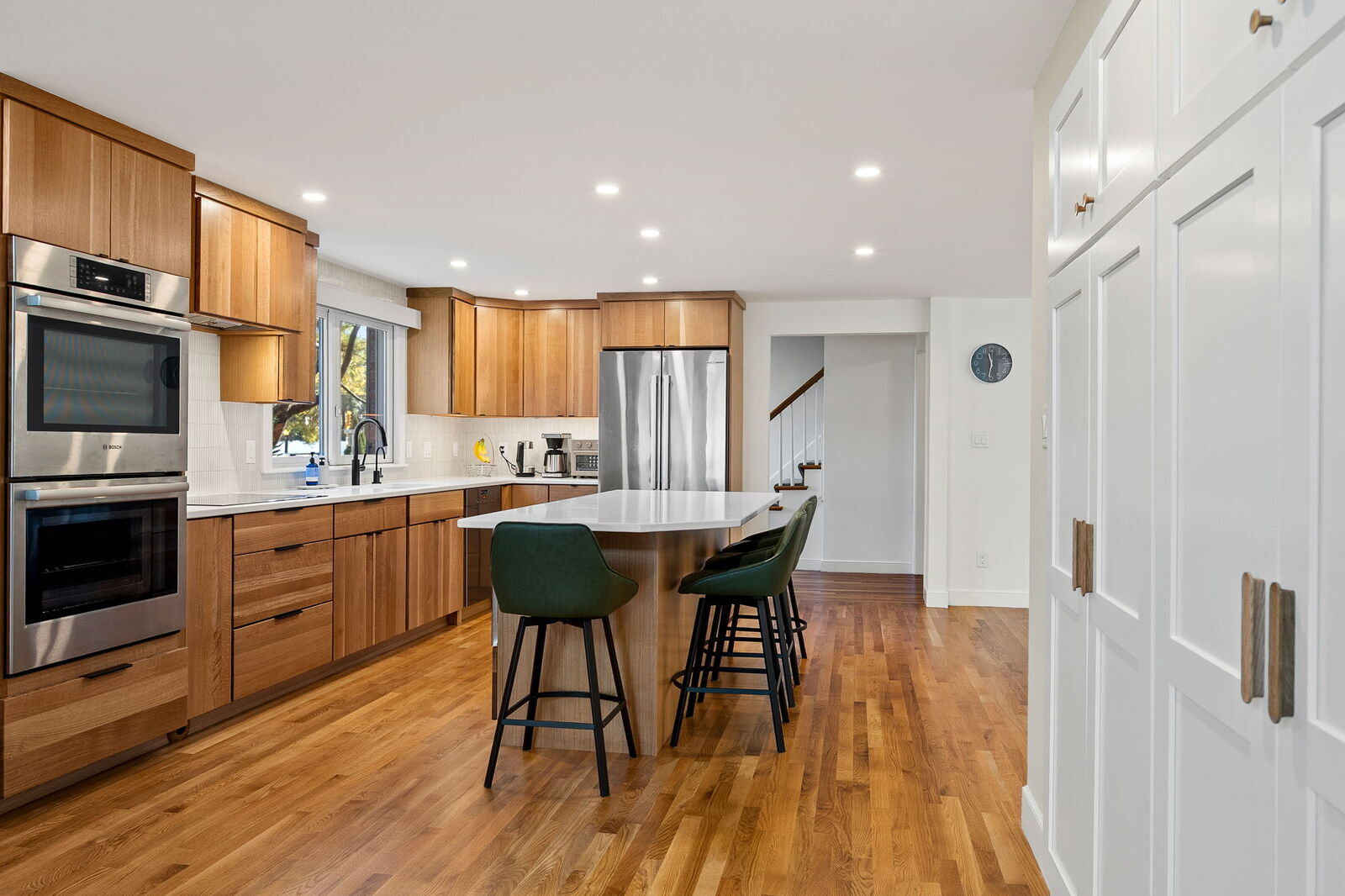
The single greatest cost driver in any kitchen home improvement project is scope. At the most basic level, a cosmetic update costs a fraction of what a full kitchen renovation costs. Once you move into gut renovation territory, costs increase significantly, regardless of whether you keep the existing kitchen layout or reconfigure it.
When DIY approaches may — and may not — make sense
Many homeowners wonder whether a DIY approach could meaningfully reduce costs. For purely cosmetic work, such as painting existing kitchen cabinets, swapping out a backsplash tile, or installing new hardware, DIY can sometimes work.
But once the project involves structural changes, electrical upgrades, plumbing, or mechanical systems, the complexity and coordination requirements grow quickly.
Most homeowners undertaking mid-range or high-end projects work with a design-build firm or general contractor, both because of the trades coordination required and because errors in planning structural or mechanical systems are expensive to correct after the fact.
What a layout-preserving remodel still involves
When the existing layout is preserved, windows, doors, and walkways stay in place. Even so, this kind of remodeling project typically involves opening walls down to the studs, replacing plumbing valves and traps, and upgrading electrical work to meet current code requirements.
Older homes often require infrastructure upgrades
Many homes, particularly those built before the 1990s, were wired to earlier electrical standards, often resulting in too few countertop outlets or outlets located in ways that don’t align with how we use kitchens today. What appears to be a layout-preserving remodel often involves more infrastructure work than homeowners initially expect.
Reconfiguration changes the equation entirely. Moving walls, shifting plumbing, and rerouting electrical introduces a cascade of work that extends well beyond the kitchen itself.
2. Layout Changes and Structural Modifications
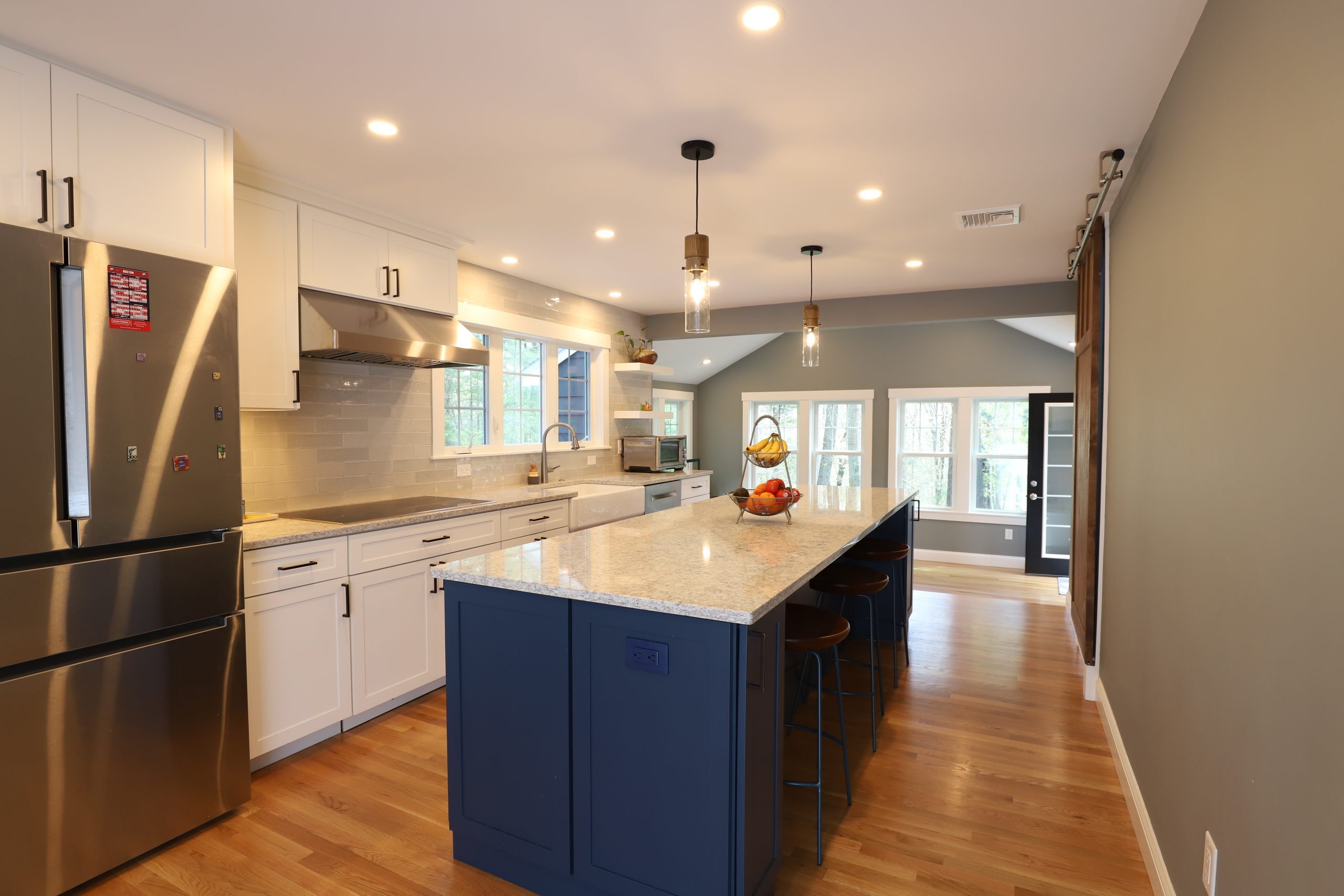
Removing a wall is rarely as simple as it sounds. If it's a partition wall with no plumbing or electrical running through it, the work is relatively contained. If it's a load-bearing wall or a partition wall that carries electrical runs to the floors above or below, the scope expands considerably.
Removing a load-bearing wall requires structural engineering, a new beam (either flush-mounted within the floor system or dropped below the ceiling joists), and support that needs to be carried through every floor below, including through the basement slab.
A finished basement may need to be opened up in sections to set proper footings. These structural changes are a significant undertaking, which is exactly why understanding them early in the design phase, rather than discovering them once construction starts, matters so much.
Opening up spaces also means adjacent rooms get touched. When a wall comes down between a kitchen and a dining room, hardwood flooring throughout the first floor may need to be replaced because there was no flooring beneath the original wall. Painting, trim work, HVAC adjustments (moving returns, adding ventilation, addressing older cast-iron radiators), and additional electrical work in adjacent spaces all become part of the project scope. The square footage of the kitchen doesn’t define the total cost; the full scope does.
3. Cabinetry and Storage Solutions
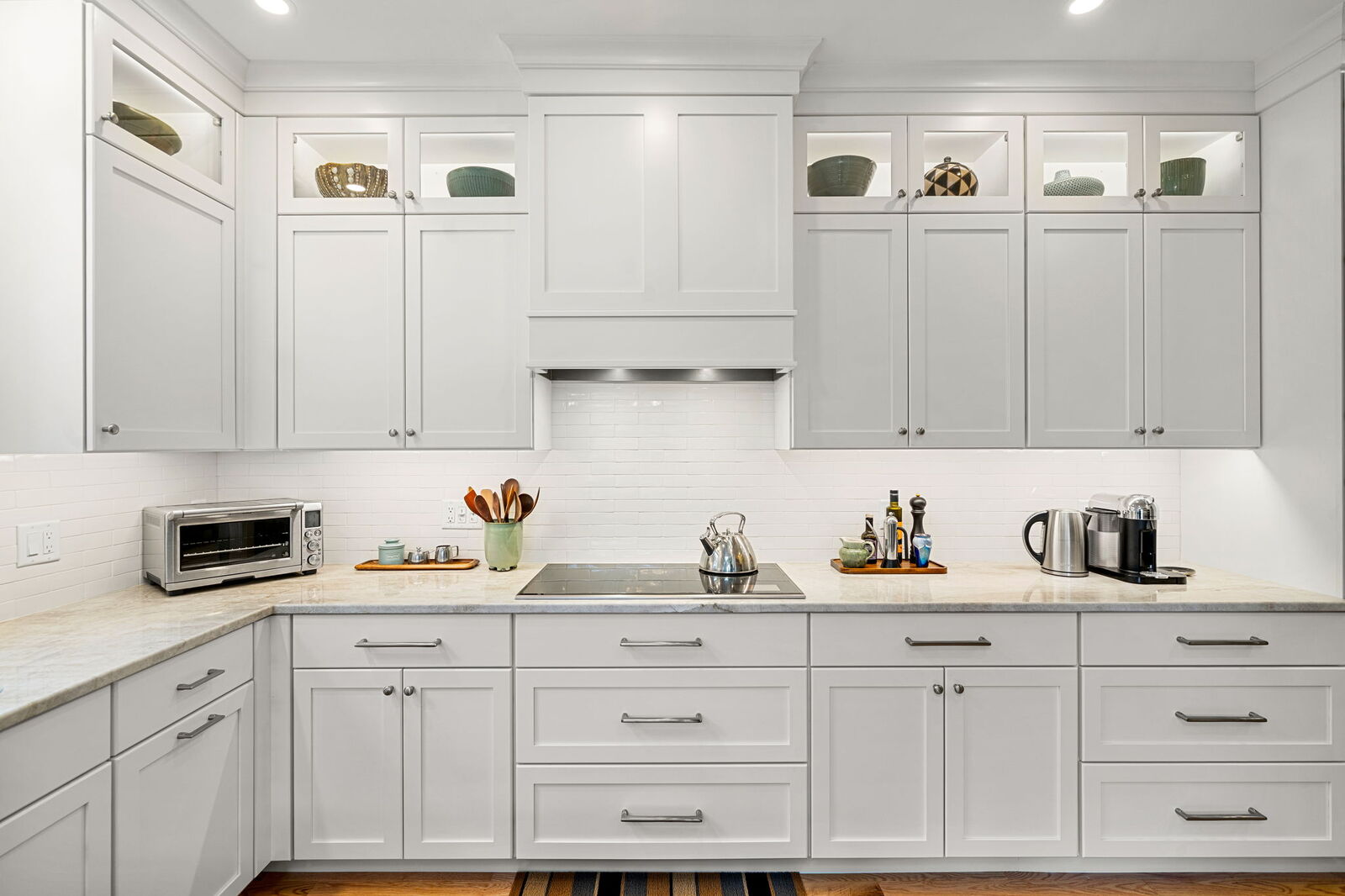
Cabinetry is one of the most visible investments in a kitchen remodel, and the differences between stock, semi-custom, and custom cabinetry are significant.
Stock cabinetry, commonly available through big-box retailers, represents the most budget-conscious tier. However, homeowners should understand the tradeoffs that come with that lower price point:
- Limited cabinet sizes, door profiles, finishes, and organizational features
- Particleboard box construction that isn't as durable as higher-end plywood construction
- Standard dimensions that often require filler strips to close gaps
- Layout limitations that force the kitchen design to work around the cabinetry sizes available
- Simplified finishes and laminate options that may replicate the appearance of painted wood, but not the durability or craftsmanship
- Per-linear-foot pricing that can appear straightforward initially, though total project costs often rise once installation, hardware, fillers, and adjustments are included
For some homeowners, stock cabinetry can be an appropriate solution. But understanding the limitations early helps clarify how cabinetry choices influence both the functionality and long-term quality of the finished kitchen.
When cabinet refacing or refinishing may make sense
Before committing to full cabinet replacement, it's worth evaluating whether refacing or refinishing the existing cabinetry might accomplish the goals. Cabinet refacing (replacing door and drawer fronts while keeping the existing box structure) can update the look of a kitchen at significantly lower cost, provided the existing cabinet boxes are structurally sound.
Semi-custom cabinetry and design flexibility
Semi-custom cabinetry is made to order within defined specifications, and it offers a substantially different experience. Colors, sizes, door profiles, and hardware options are extensive. A cabinet designer can configure the space to take advantage of every inch, accommodate paneled appliances, customize trim all the way to the ceiling, and incorporate specialized storage solutions, including pull-outs, corner cabinet systems, and specific drawer configurations, that make daily use of the kitchen meaningfully better. Semi-custom uses all-plywood construction for the cabinet boxes, which is significantly more durable than particle board. And where a very specific size is needed for one or two cabinets, it's possible to specify fully custom cabinets within the same line while keeping the rest at semi-custom pricing. For most kitchens, semi-custom can accomplish nearly everything a fully custom approach can.
When fully custom cabinetry becomes necessary
Fully custom cabinetry makes sense in specific scenarios: very particular dimensions, unusual architectural conditions like angled ceilings, a homeowner wanting to use a specific wood species, or a design built around a statement appliance.
4. Appliances and Fixtures
Appliance selections influence more than appearance
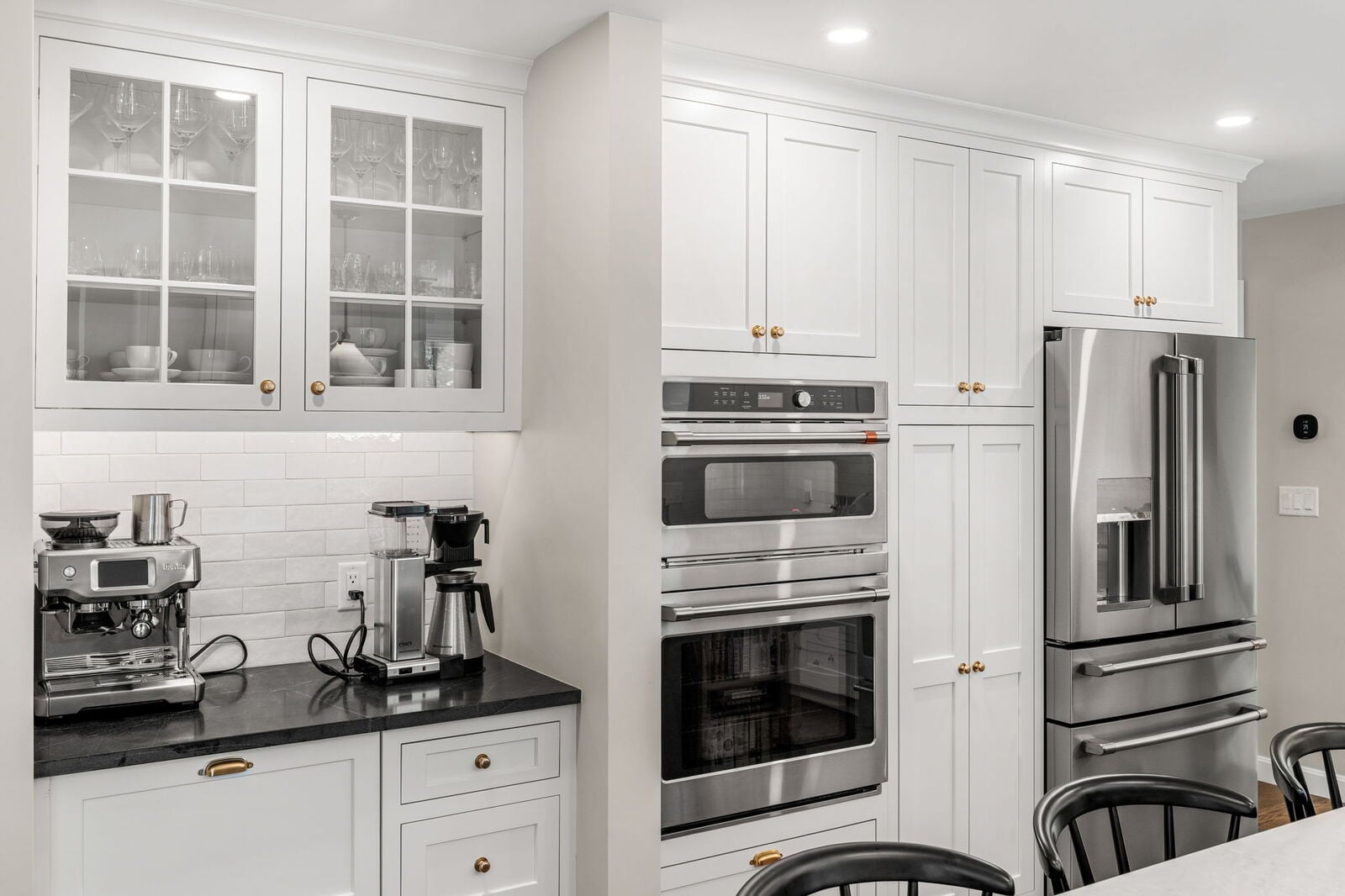
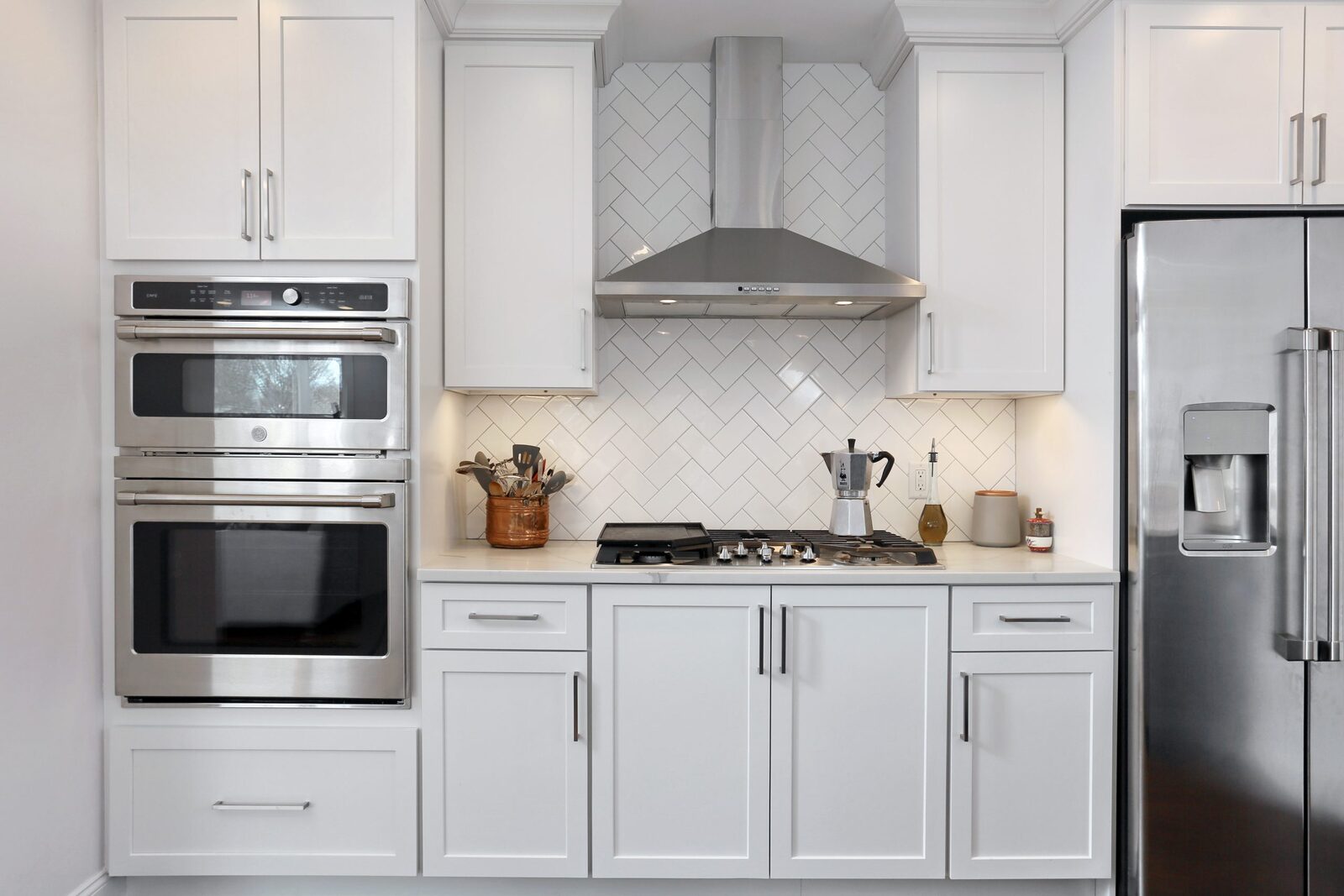
Appliances are typically selected by the homeowner, but they have to be coordinated carefully with the kitchen design. Beyond the visual, whether you're going with stainless steel appliances, paneled fronts, or color finishes, each choice has functional and structural implications.
Paneled appliances require confirmation that the cabinet line can accommodate custom door panels. A high-output range may require makeup air: ventilation that compensates for the volume of air being exhausted out of the home. A range that requires more than 400 CFM of exhaust capacity will need a system to replenish that air, whether that's a damper tied into an existing duct system or an energy recovery ventilator.
 Gas, electric, and induction considerations
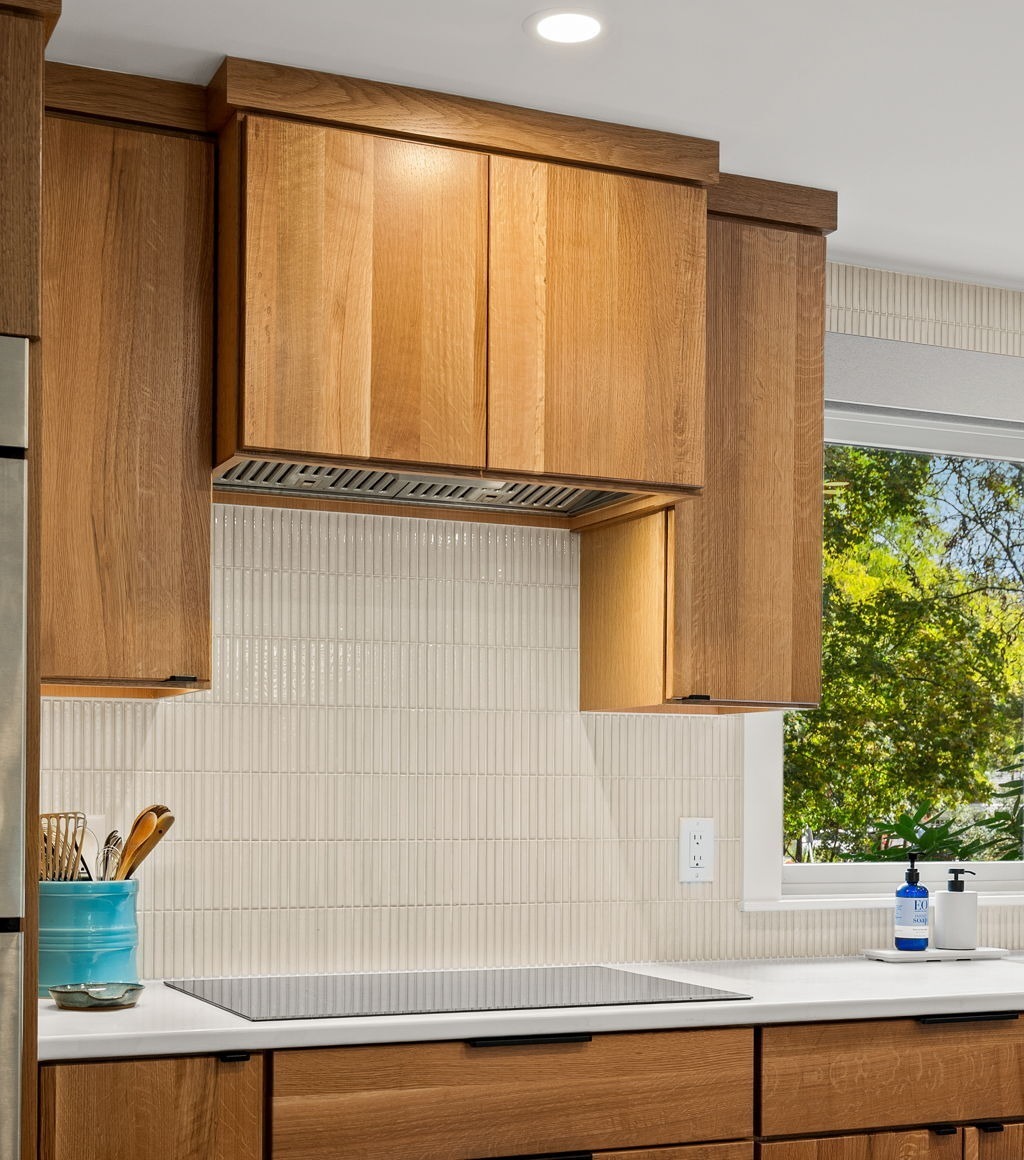
The choice between gas, electric, and induction also has real infrastructure implications, and energy-efficient induction ranges are increasingly popular among homeowners who want high performance without a gas line.
In Massachusetts, some cities and towns have moved away from gas entirely, and if service has been cut at the street, it cannot be restored. Homeowners who want to reconfigure a kitchen with an existing gas line will need to plan for
rerouting it.
Going from gas to electric is generally more straightforward than the reverse, though homes that are already near their electrical capacity may require additional power, which often involves upgrading to a larger electrical panel. This is something an electrician can determine through a load calculation during the design phase, before any work begins.
 Fixture selections and early coordination
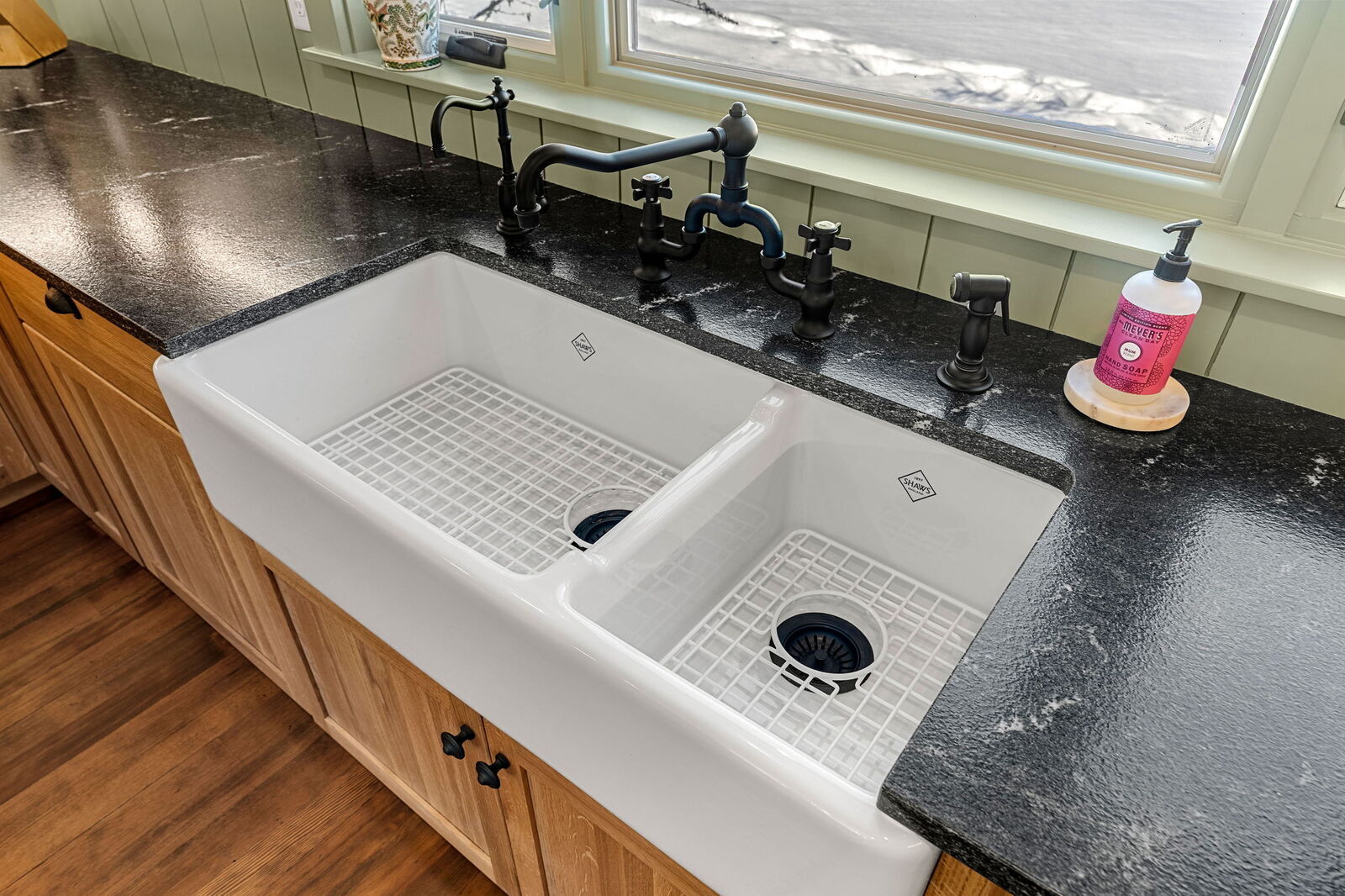
The faucet, sink, and plumbing fixtures round out this category. Fixture selections vary widely in price, and while they typically account for a smaller share of the total project cost than cabinetry or appliances, they contribute meaningfully to both the finished look and the daily experience.
Appliance and fixture decisions made early give the design team what they need to plan around them properly; decisions made late can require changes that ripple through cabinetry, electrical, and ventilation plans.
5. Materials and Finishes
Flooring and countertop investment considerations
Of the primary material choices in a kitchen renovation, flooring tends to carry the highest total cost, particularly when structural changes extend it into adjacent rooms. In square-foot terms, flooring often rivals or exceeds countertops as a line item, especially in larger open-plan spaces.
Countertop materials follow, with quartz and quartzite representing the most common choices at the higher end, alongside soapstone, butcher block, and laminate options for different budget ranges and aesthetic preferences.
Lighting design and electrical planning
Lighting is often underestimated. A well-designed kitchen typically involves multiple types of light fixtures, recessed ceiling lights, pendant lighting over an island, and under-cabinet lighting, and getting there often means reworking the electrical layout.
High-end lighting finishes can add considerably to the project total, while more restrained fixture choices can keep this line item in check without compromising the overall design.
The role of backsplash, hardware, and finish details
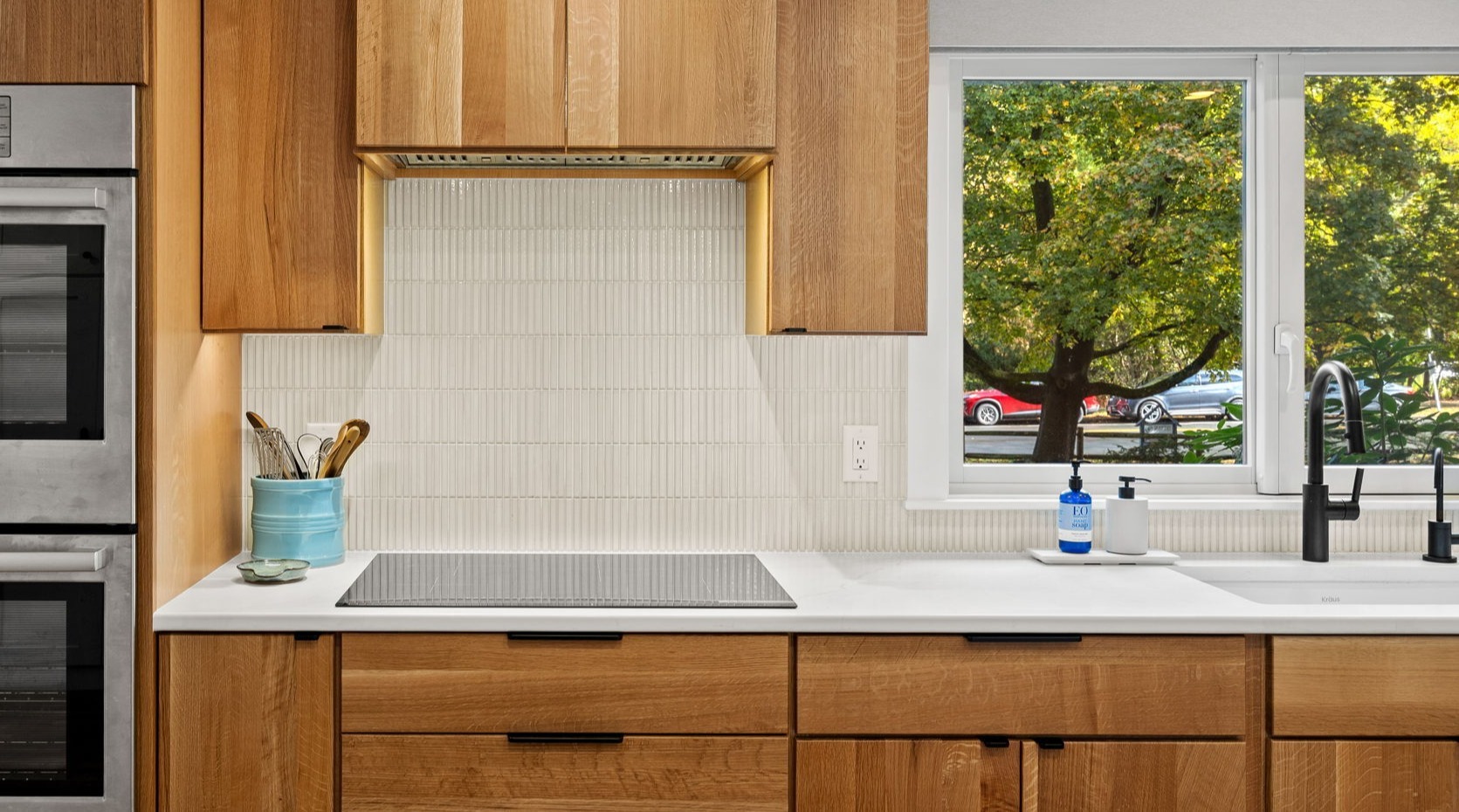
Tile backsplash is highly visible and sets much of the kitchen's tone, but generally represents a smaller share of the total project cost. Hardware is similar; individual pieces are inexpensive, but the cumulative cost across pulls, knobs, and specialty items adds up.
These surface-level choices are worth making intentionally; they're among the most visible details in the finished kitchen, but they rarely move the total project cost as dramatically as cabinetry, structural work, or flooring.
Why North Shore Kitchens are Often More Complex
Structural Planning
The homes throughout the North Shore and surrounding communities in Essex and Middlesex counties present a consistent set of challenges that go beyond what applies to newer construction elsewhere.
Older homes were built with segmented, compartmentalized layouts that many homeowners now want to open up, which almost always involves structural work. They're rarely perfectly level, sometimes off by several inches from one corner to another.
Mechanical Systems Need Modernization
Mechanical systems are often outdated: cast-iron radiators, electrical panels that haven't been updated in decades, plumbing that was installed long before current code requirements.
These conditions are common in older homes, but they influence both the design approach and the level of coordination required during construction.
Neighborhood Density
Beyond the homes themselves, the density of many North Shore neighborhoods adds logistical complexity. Properties close together may require coordinating with neighbors just to access certain parts of the exterior.
What looks straightforward on a drawing can involve considerable planning on the ground.
None of this is cause for hesitation. It is, however, a reason to invest in thorough planning before a single wall comes down.
What a Kitchen Remodel Does For Your Home's Value
Kitchen renovations consistently rank among the home improvement projects with the strongest return on investment. A well-executed kitchen remodel typically improves both livability and resale value, with mid-range projects often recovering a meaningful percentage of their cost at sale, and high-end remodels adding significant appeal to buyers even when the dollar-for-dollar return is lower.
For homeowners who plan to stay for years or decades, the calculus is less about resale value and more about daily quality of life. A new kitchen that functions well, uses space efficiently, and reflects how a family actually lives delivers value every day, not just at the point of sale. The 30% guideline (spending no more than 30% of your home's value on a kitchen renovation) is sometimes cited as a framework for resale optimization, but it's rarely the right lens for homeowners whose primary goal is long-term livability.
What matters more is aligning the scope and quality of the project with the home and the neighborhood. A thoughtful, quality renovation in a neighborhood of similar-caliber homes is an investment in both the house and the way you live in it.
A Better Way to Plan Your Kitchen Remodel Investment
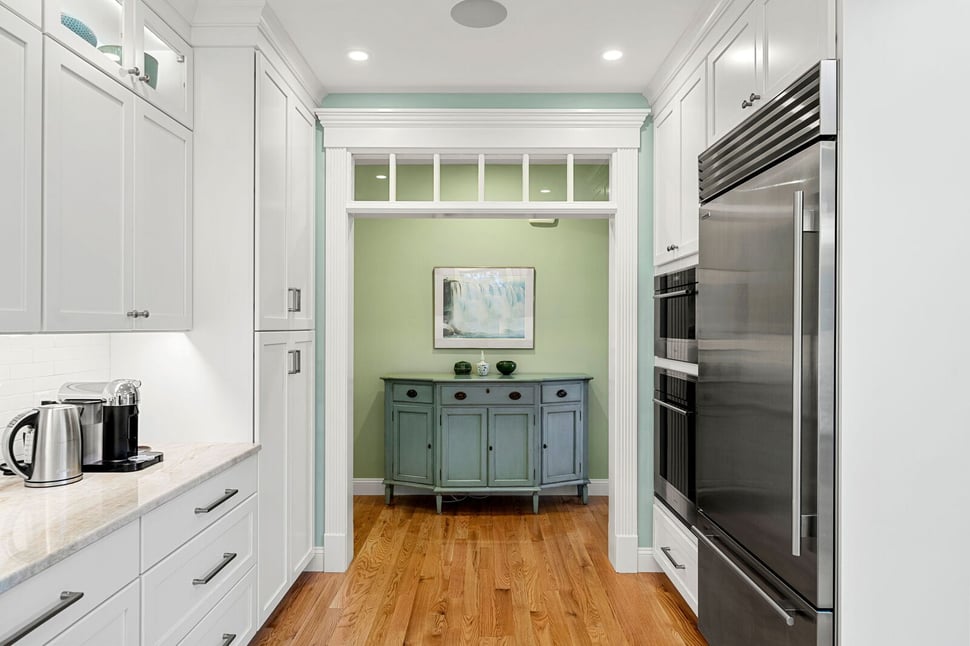
The most reliable path to an accurate remodel budget is a clearly defined scope. That process starts not with finishes and fixtures but with the problems you're trying to solve and the goals you're working toward. What does success look like: improved functionality, more space, a dream kitchen that reflects how you actually live?
Once priorities are established and a must-have list is distinguished from a wish list, design can translate them into specific decisions: what stays, what moves, what gets replaced. Working with a design-build firm that integrates both planning and construction means those decisions are informed by real structural and cost knowledge from the start, not revisited once a separate designer hands off plans to a builder.
It's during the design phase that structural considerations are uncovered, mechanical updates are planned, and a realistic investment range takes shape. A design-build approach brings design and construction thinking together from the beginning, which means structural realities, code considerations, and cost implications are understood early, not discovered mid-project.
The result is fewer surprises, more accurate budgeting, and a kitchen designed for long-term use rather than just today's needs.
Clarity Before Construction
Kitchen remodel costs depend on what the project actually requires. The scope defines the budget, not the other way around. A thorough planning process, one that uncovers structural realities, defines priorities, and establishes scope before pricing begins, leads to better outcomes, more accurate estimates, and a kitchen that serves you well for years to come.
If you're beginning to think through a kitchen remodel on the North Shore, download our free ebook, Kitchen Remodel Planning Guide: Layout, Investment, and Design Decisions That Matter, for a deeper look at the decisions that shape your project before construction ever begins.

Frequently Asked Questions About Kitchen Remodeling
What factors influence the cost of a kitchen remodel?
The primary drivers are the scope of work, the degree of layout changes or structural modifications, cabinetry selection, appliances and fixtures, and material choices. Labor costs vary depending on the project's complexity and which trades (electrical, plumbing, HVAC, and structural engineering) are involved.
What is the most expensive part of redoing a kitchen?
For most full kitchen renovations, cabinetry and labor represent the largest portions of the total cost. Structural changes, particularly when load-bearing walls are involved, can add significantly to both, due to the work they require in adjacent spaces and in the floors below.
How do I estimate the cost of a kitchen remodel?
The most accurate way to estimate kitchen remodel costs is to define the scope first: what stays, what changes, and what level of finish you're targeting. A design-build firm can develop a realistic investment range once those decisions are clear and identify any structural or mechanical factors that would affect the budget before design is finalized.
What is the 30% rule in remodeling?
The 30% rule suggests spending no more than 30% of your home's value on a kitchen renovation if maximizing return on investment is the primary goal. It's a general guideline, not a prescription. For homeowners who plan to stay in their homes for years or decades, the more relevant consideration is often long-term functionality and livability rather than a resale calculation alone.
How do I budget my kitchen renovation?
Start with goals and priorities, not with a number. Once you understand what you need the kitchen to do and what scope of work is required to get there, a realistic budget can be established. Being transparent about your investment range early in the process allows the design team to determine whether the project is feasible, and to identify where trade-offs might make sense.
How can you save money on a kitchen remodel?
Scope and material trade-offs can reduce costs: keeping the existing layout rather than reconfiguring it, choosing semi-custom over fully custom cabinetry, and selecting a less expensive countertop material. But each tradeoff carries a consequence: a layout that still doesn't fully work, storage that falls short of what you need, and finishes that may not hold up over time. The more durable path to protecting your investment is the planning process itself. A well-run design-build process defines scope completely before construction begins, which eliminates or significantly reduces additional work authorizations, mid-project decisions, and unexpected discoveries that tend to inflate costs significantly. In most cases, the homeowners who feel best about what they spent aren't the ones who cut the most corners – they're the ones whose project went exactly as planned.
What should homeowners consider during a kitchen remodel?
Beyond materials and finishes, homeowners should think carefully about how the kitchen functions day-to-day, whether the layout serves how they actually use the space, and whether underlying mechanical systems need updating as part of the project. For homes with structural considerations (load-bearing walls, older electrical panels, gas lines that would need to be relocated), understanding those factors before finalizing the scope leads to a more accurate budget and a smoother project.
Ready to Explore What’s Possible?
Every successful kitchen remodel starts with clarity: understanding your goals, your home, and the level of investment required to achieve the outcome you want.
Whether you’re beginning to gather ideas or already thinking seriously about remodeling, the conversation is designed to help you move forward with greater clarity and confidence. Start the conversation about your kitchen remodel vision today. Schedule Your Free Discovery Call >