.png)
Listen to the Blog Post
Walk into the kitchen of many older North Shore homes, and the original intent of the space becomes immediately clear: these kitchens were designed for utility, not for gathering.
Homes built before the 1970s were often designed with smaller, more enclosed kitchens that were separated from the main living areas of the home. Meals were prepared privately and carried into formal dining rooms designed for regular family dinners and entertaining.
Today, that relationship has largely reversed.
In today’s households, the kitchen has become the center of daily life. It is where meals are prepared and eaten, where homework gets done, where guests naturally gather, and where much of the household moves throughout the day.
When an older floor plan is asked to support modern daily life, its limitations become hard to ignore.
For most homeowners, the real frustration is not the finishes; it is how the kitchen actually functions. The kitchen may have enough square footage on paper, but the layout no longer supports how the home is used day to day.
That distinction matters because, in older North Shore kitchens especially, the most meaningful improvements come from rethinking first‑floor flow through a structured design process, not simply replacing finishes within the existing footprint.
Table of Contents
1. Why Older Kitchen Layouts Feel Restrictive
2. The Most Impactful Layout Changes in Older Homes
3. Why Fully Open Concept Is Not Always the Answer
4. The Right Solution Depends on How the Household Lives
6. Why the Entire First Floor Matters
Why Older Kitchen Layouts Feel Restrictive
Dated kitchens were designed around a very different understanding of how the space would be used. Cooking was typically a one-person task, entertaining rarely centered around the kitchen, and formal dining rooms played a much larger role in daily life.
As a result, many older kitchens create recurring frustrations for households using the space for family life, entertaining, and remote work.
Common layout issues include:
- Poor Traffic Flow: Tight galley kitchens, enclosed U-shaped layouts, and narrow walkways often make it difficult for multiple people to move through the space comfortably at the same time.
- Limited Storage and Workspace: Older kitchens were not designed for the size of today’s appliances, the depth of modern kitchen cabinets, or the amount of cookware and countertop devices most households now rely on.
- Lack of Natural Light: Smaller windows, poorly placed light fixtures, and compartmentalized floor plans can make the kitchen feel darker and more enclosed than the surrounding areas of the home.
- Disconnected First-Floor Layouts: Kitchens separated from dining rooms, family rooms, and outdoor living spaces, creating a fragmented flow throughout the first floor.
- Structural Constraints: In older North Shore homes, chimneys, radiators, and load‑bearing walls are especially common, which can limit where openings, cabinetry, and appliances can reasonably be placed.
These limitations affect not just the kitchen itself but also how the entire first floor functions.
The Most Impactful Layout Changes in Older Homes
Reworking the Dining Room Often Unlocks the Kitchen
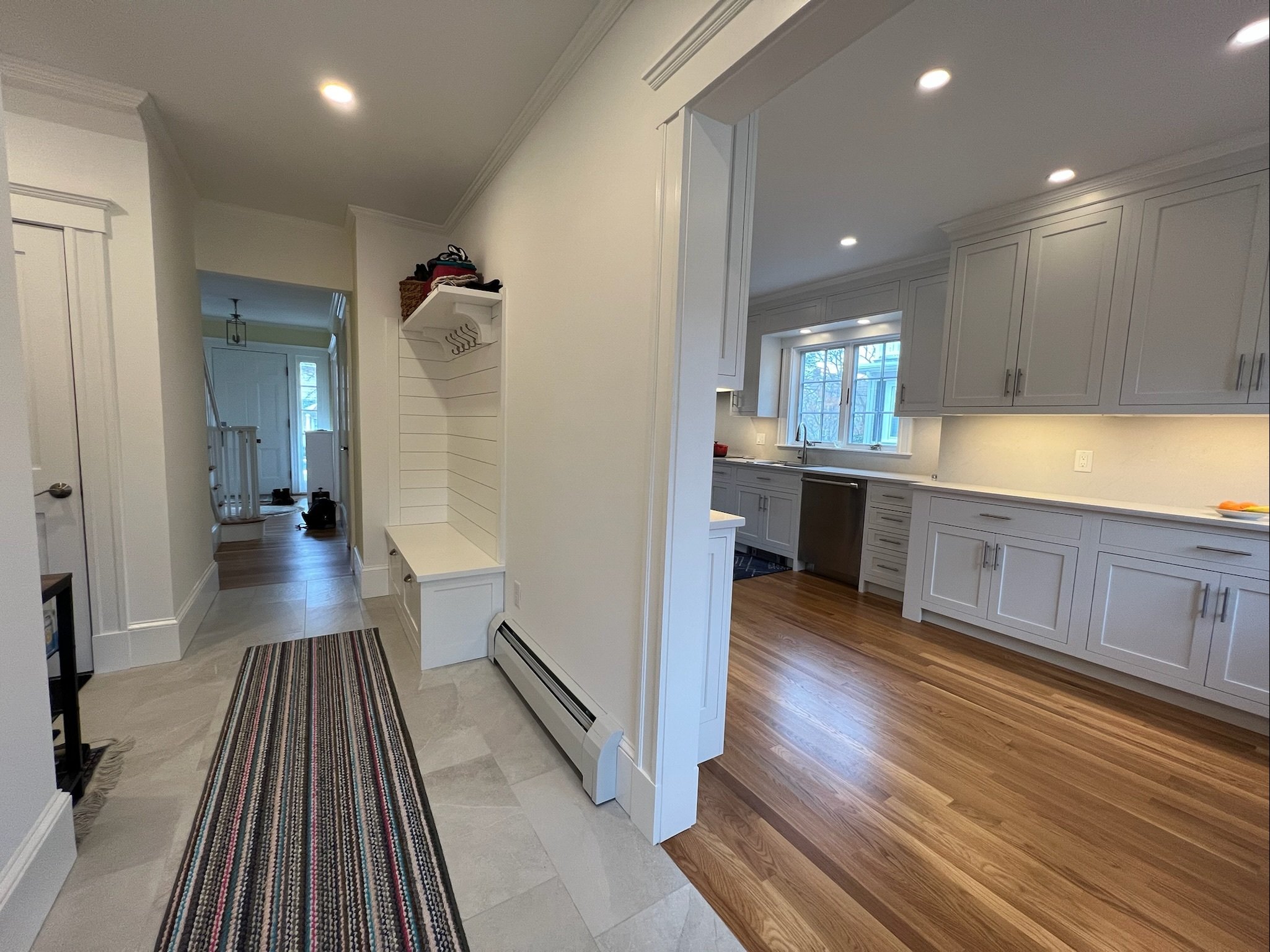
One of the most significant improvements in older kitchen remodels comes from rethinking the relationship between the kitchen and adjacent rooms, particularly the formal dining room.
The scale of a formal dining room made sense when households sat down for formal dinners every night. Today, it often serves as a pass-through and a place to store furniture nobody sits in.
Thoughtfully opening the kitchen to the dining room can improve flow, function, and natural light. This helps the first floor to feel larger and more connected.
Adjacent Spaces Often Influence Kitchen Functionality
The kitchen is rarely the only space affecting how the first floor functions. Oversized hallways, adjacent family rooms, mudrooms, and back entries often become part of the remodeling conversation as well.
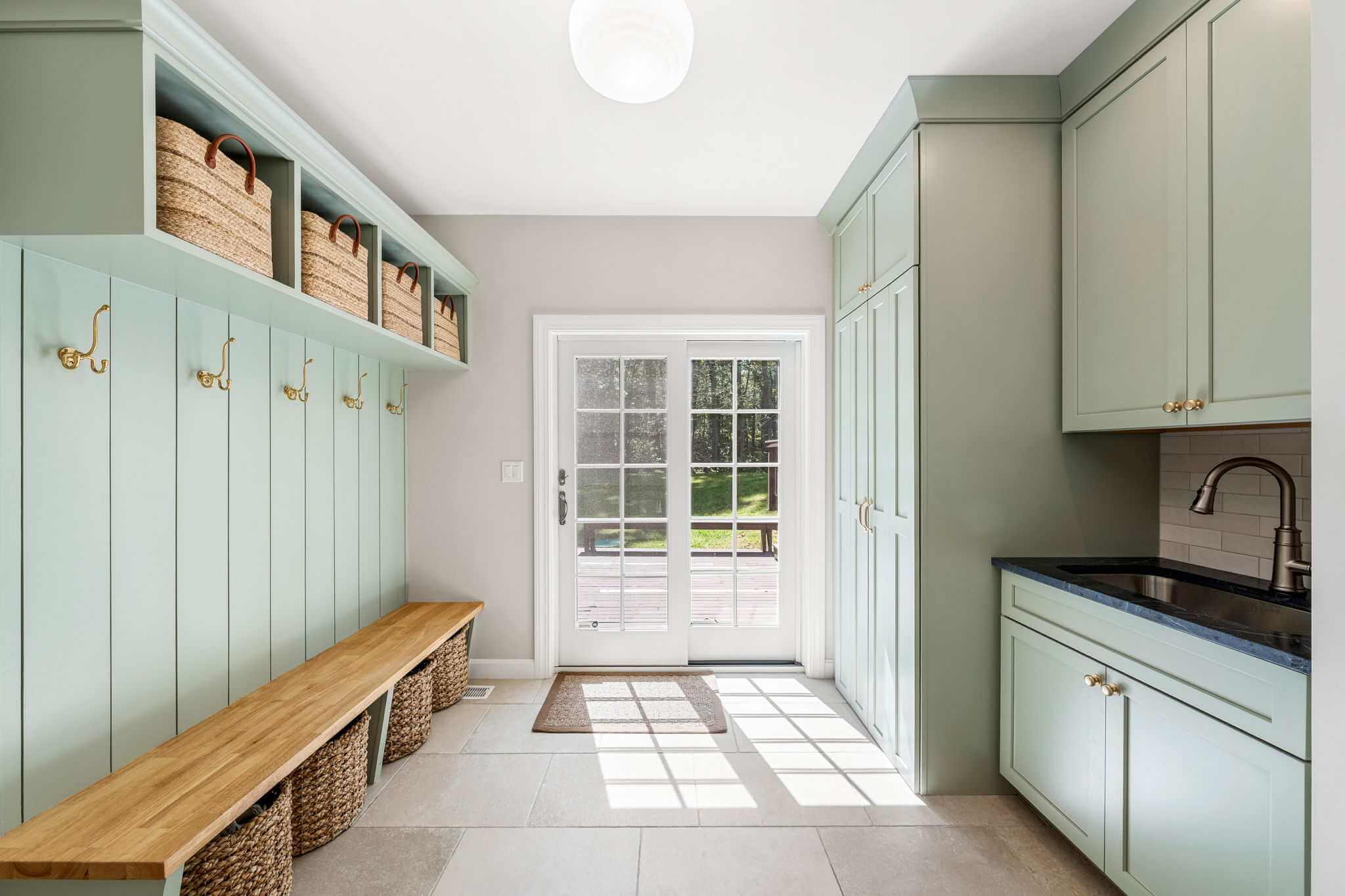
For many families, the issue is not simply a lack of kitchen storage but a lack of organization surrounding the kitchen. A custom-designed mudroom or drop zone near the back entry or garage can improve how the kitchen functions far more effectively than additional cabinetry alone, because daily items have a defined place to land before they reach the kitchen.
The most successful remodels, therefore, look beyond the kitchen itself and focus on how the surrounding spaces work together day to day.
Why Fully Open Concept Is Not Always the Answer
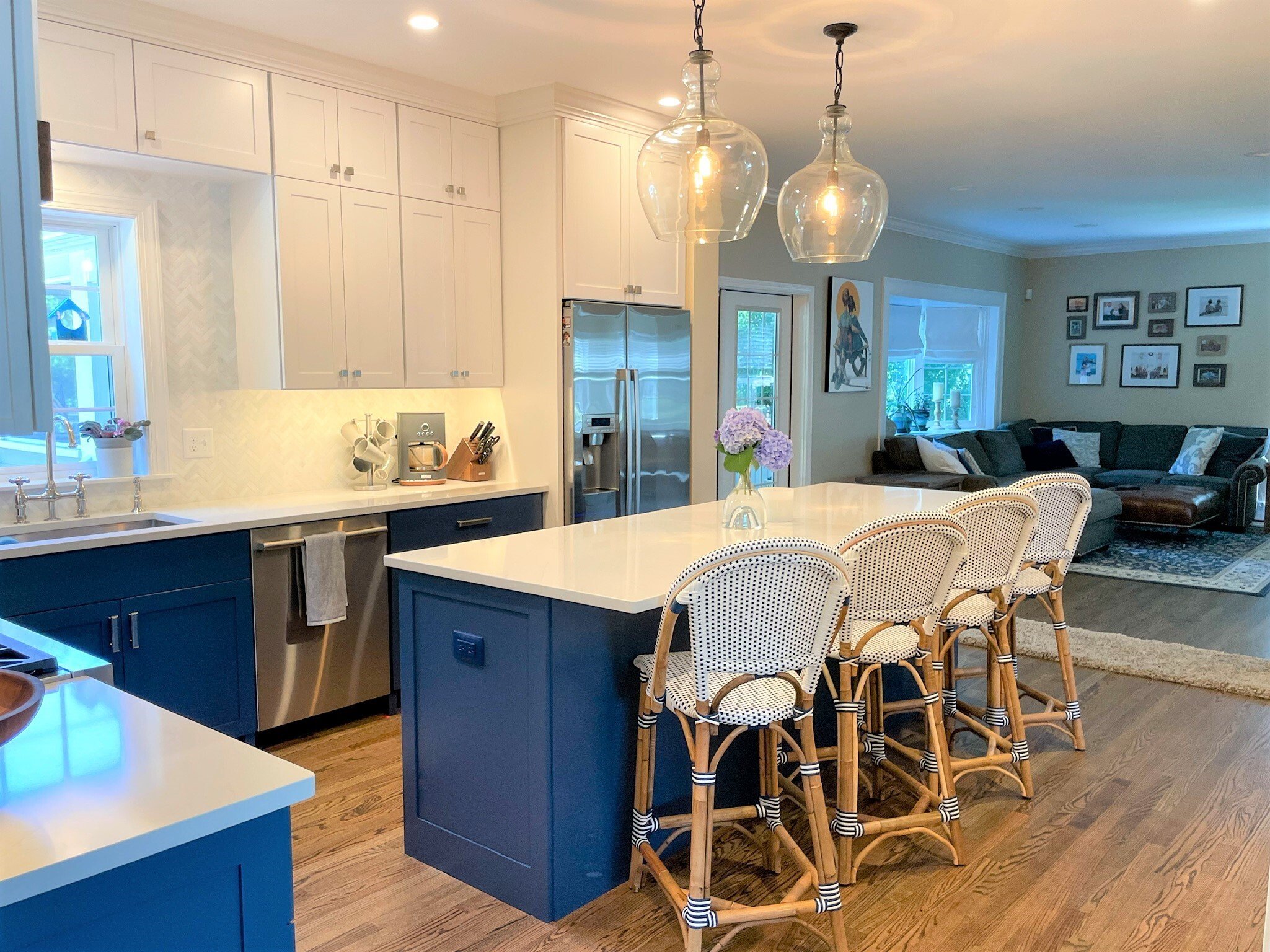
For years, kitchen design trends focused on removing as many walls as possible. Today, homeowners are becoming more selective about how open they actually want the first floor to feel.
A fully open layout can create challenges of its own:
- Noise travels more easily throughout the first floor
- Meal preparation, dishes, and kitchen clutter remain visible from surrounding spaces
- Wall space for cabinetry, storage, and furniture becomes more limited
- Rooms lose a sense of separation and privacy
Without some degree of definition between spaces, the home can begin to feel visually overstimulating and chaotic.
Defined Spaces Often Feel More Comfortable
In older homes, especially, maintaining some original architectural definition often leads to a more timeless, well‑balanced first floor.
What tends to work best is improving connection and flow between spaces without removing every boundary entirely. Thoughtfully enlarged openings can create better visual connections between rooms and improve how people move through the home, allowing the kitchen to feel more connected to surrounding spaces without losing the identity and function of each area.
The Right Solution Depends on How the Household Lives
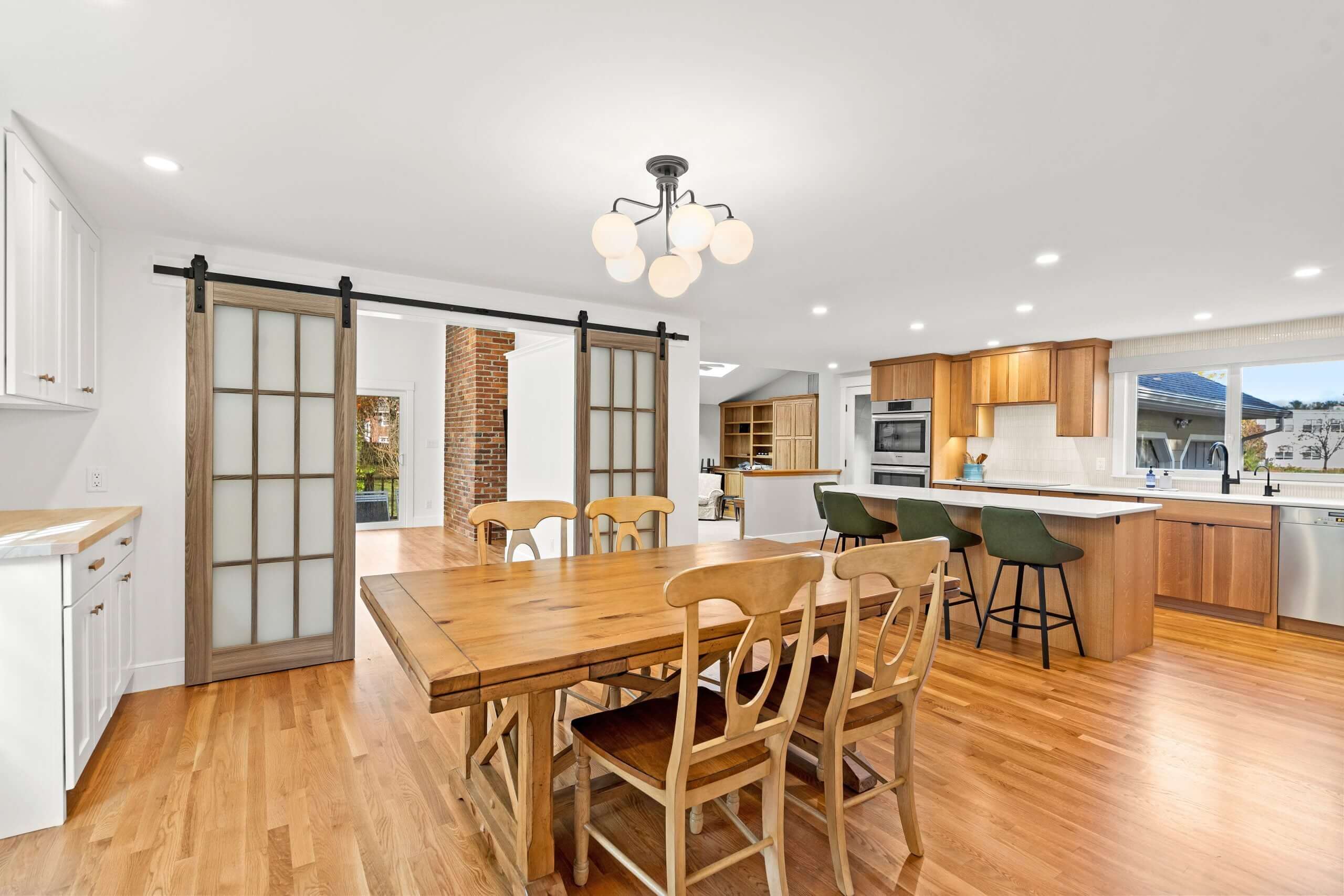
The best floor plan decisions begin with understanding how the household actually moves through the home.
In one recent project, homeowners initially believed they needed a kitchen remodel that would use the existing layout, but after talking through their challenges and evaluating the first floor more broadly, it became clear that the garage entry, not the front door, was where daily life truly began. The new kitchen design was reorganized around that reality, incorporating a dedicated drop zone after walking through the garage entry, clearing up traffic through the back hall, and improving the connection to the kitchen.
That level of discovery—understanding how the household functions before any layout is drawn—is what separates thoughtful, design‑led planning from a generic renovation.
Kitchen Islands Are Not Always the Right Solution
Kitchen islands are among the most requested elements in a contemporary kitchen remodel, but they are not always the right choice for the available space.
In some kitchens, adding an island creates new layout challenges rather than solving existing ones. Walkways become too narrow, work zones overlap, movement through the space becomes more difficult, and the room begins to feel crowded.
When Peninsulas and Banquettes Work Better
In many older homes, a peninsula or built-in banquette can be a more practical solution than a large island.
Because a peninsula connects to existing cabinetry or a wall, it can add prep space, seating, and storage while making efficient use of the available square footage. In tighter kitchens, this often creates a more functional layout without narrowing walkways or making the space feel cramped.
A built-in banquette creates a more casual dining area. This may better support everyday living than a formal dining room used only occasionally. Often tucked into a corner nook or bay window, banquettes maximize seating while creating a comfortable gathering space integrated directly into the kitchen layout.
The right solution depends on the home's dimensions, the first-floor structure, and how the household moves through the space.
Successful interior design is less about incorporating a specific feature and more about creating a layout that supports how the household actually lives.
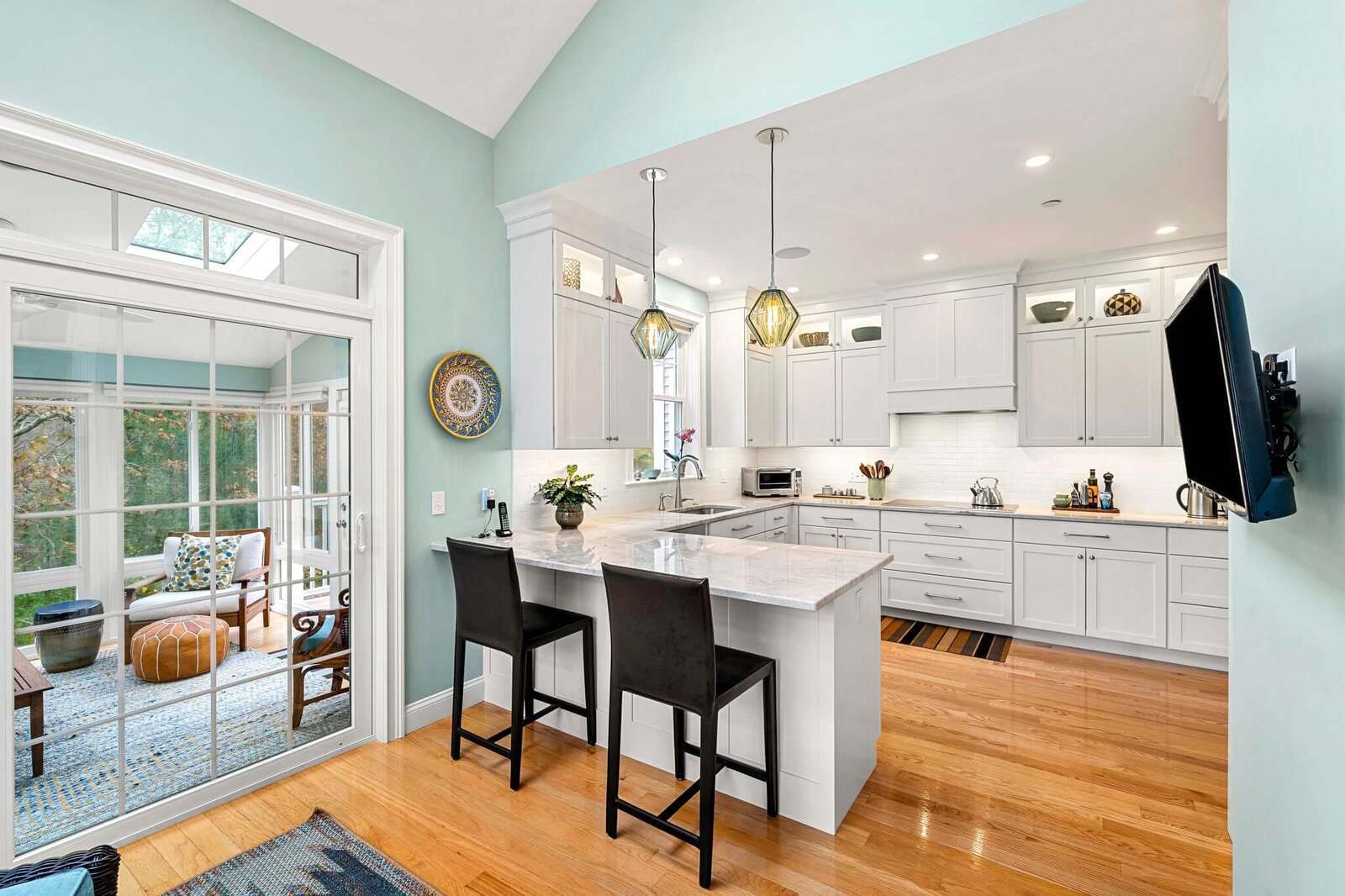
When the Kitchen Problem Is Really a First-Floor Layout Problem
One of the most important parts of the planning process is understanding the difference between a symptom and the underlying problem.
Homeowners often contact us with a specific frustration. The kitchen feels cramped. There is not enough storage. The island feels too large. There is no space for a table. Those concerns are real, but they are not always caused by the kitchen itself.
In many older homes, the kitchen is only one piece of a larger first-floor layout challenge. Because many older homes were designed around different lifestyles and household needs, spaces that once made sense may no longer support how families live today. Dining rooms may sit largely unused, enclosed sunrooms may function as occasional spaces rather than everyday living areas, and walls that separate rooms can limit how the first floor works as a whole.
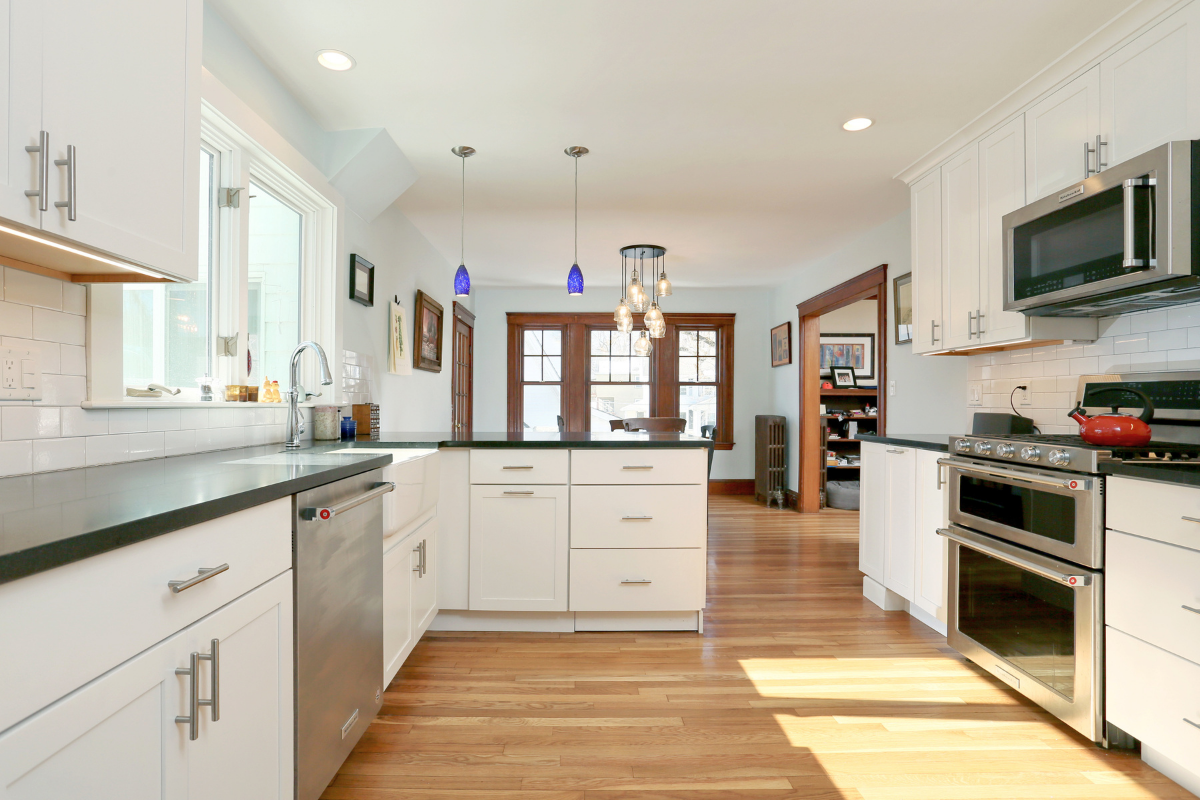
Looking Beyond the Kitchen
We recently worked with homeowners who believed their primary challenge was a lack of space in the kitchen. At first glance, the solution seemed straightforward: remodel the kitchen.
As we evaluated the home more closely, it became clear that the issue extended beyond the kitchen itself. The dining room was rarely used, and an adjacent sunroom was uninsulated and disconnected from daily life. Rather than focusing solely on updating the cabinetry and finishes, the project became an opportunity to rethink how all three spaces worked together.
By redesigning the relationship among the kitchen, dining room, and sunroom, we created a layout that better supported the homeowners' actual way of living.
In another project, the homeowners wanted a larger kitchen but were unsure how to achieve it within the existing footprint. Through the planning process, we identified an opportunity to install a structural steel beam, which dramatically expanded the kitchen and created space for a dedicated laundry area and mudroom. The result addressed multiple challenges at once rather than simply increasing square footage.
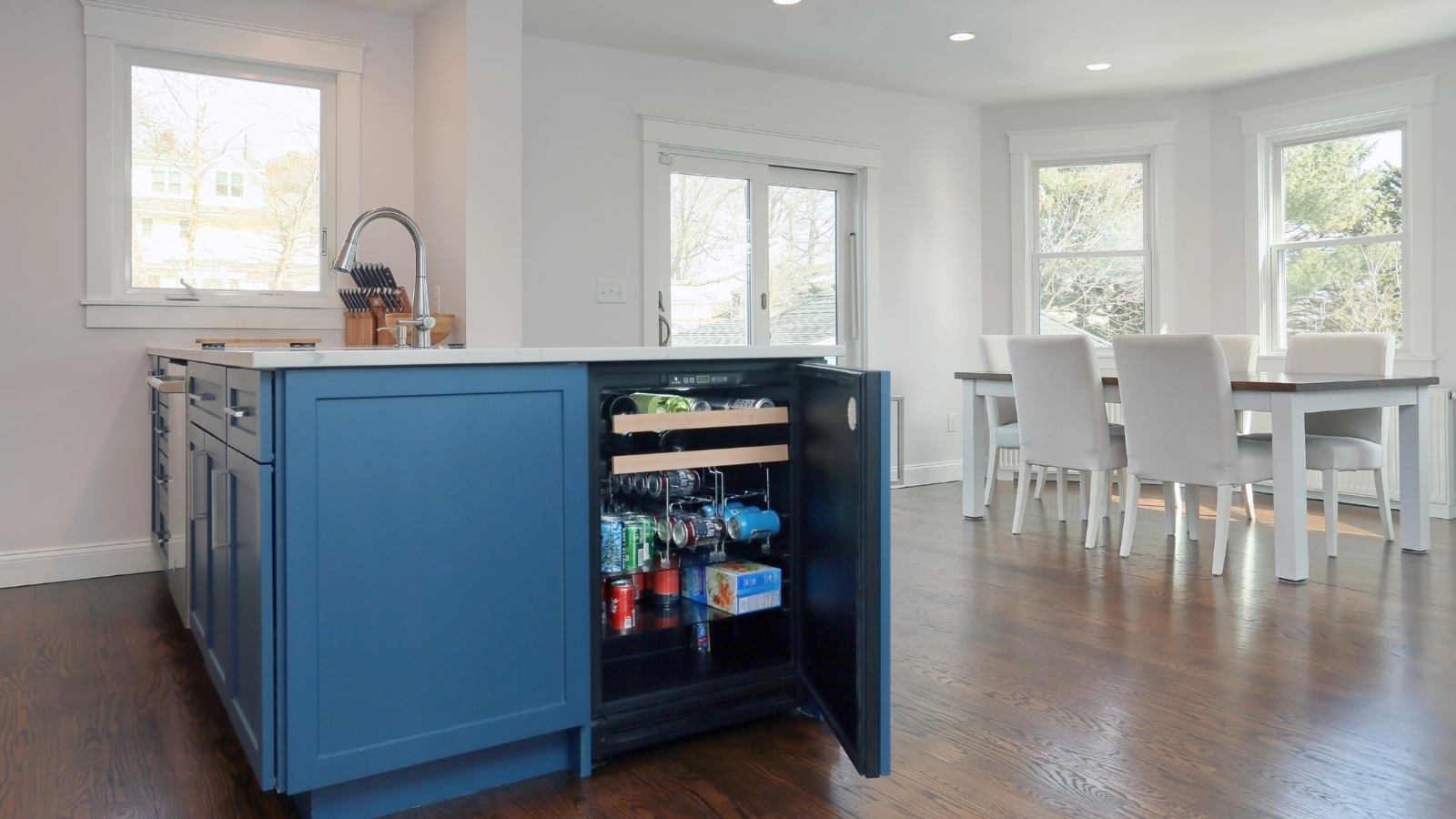
Why the Entire First Floor Matters
When homeowners are making a significant investment in remodeling, it is important to understand how one change affects the rest of the home.
Kitchens rarely exist in isolation. Expanding a kitchen may affect the dining room. Removing a wall may influence how adjacent spaces function. Storage needs, traffic patterns, gathering areas, and future lifestyle changes all play a role in determining the best solution.
It is also important to think beyond today's needs. A layout that works well for a family with children may need to support empty-nesting, frequent guests, aging parents, or multigenerational living in the future.
Because every home is different, there is rarely a plug-and-play solution.
.png?width=1200&height=800&name=marblehead-first-floor-remodel%20(7).png)
Planning Before Building
Occasionally, homeowners come to us with a budget that addresses part of the problem but not the larger issue creating it. In those situations, we may recommend waiting until the project can be approached more comprehensively, or we may develop a Master Plan that allows improvements to be completed in phases.
Our goal is to make sure the investment solves the right problem.
When the planning process starts by evaluating how the entire first floor functions, homeowners often discover opportunities that would never have been identified by focusing on the kitchen alone. In many cases, those insights lead to a home that works better today while remaining flexible for whatever comes next.
Before You Remodel Your Kitchen, Start With a Plan
If you are in the early stages of considering a kitchen remodel, the Kitchen Remodel Planning Guide: Layout, Investment, and Design Decisions That Matter walks through the key choices that shape a successful project before construction begins.

Explore what is possible in your home by first gaining a clearer understanding of the process, then start the conversation when you are ready to discuss your project in more detail.