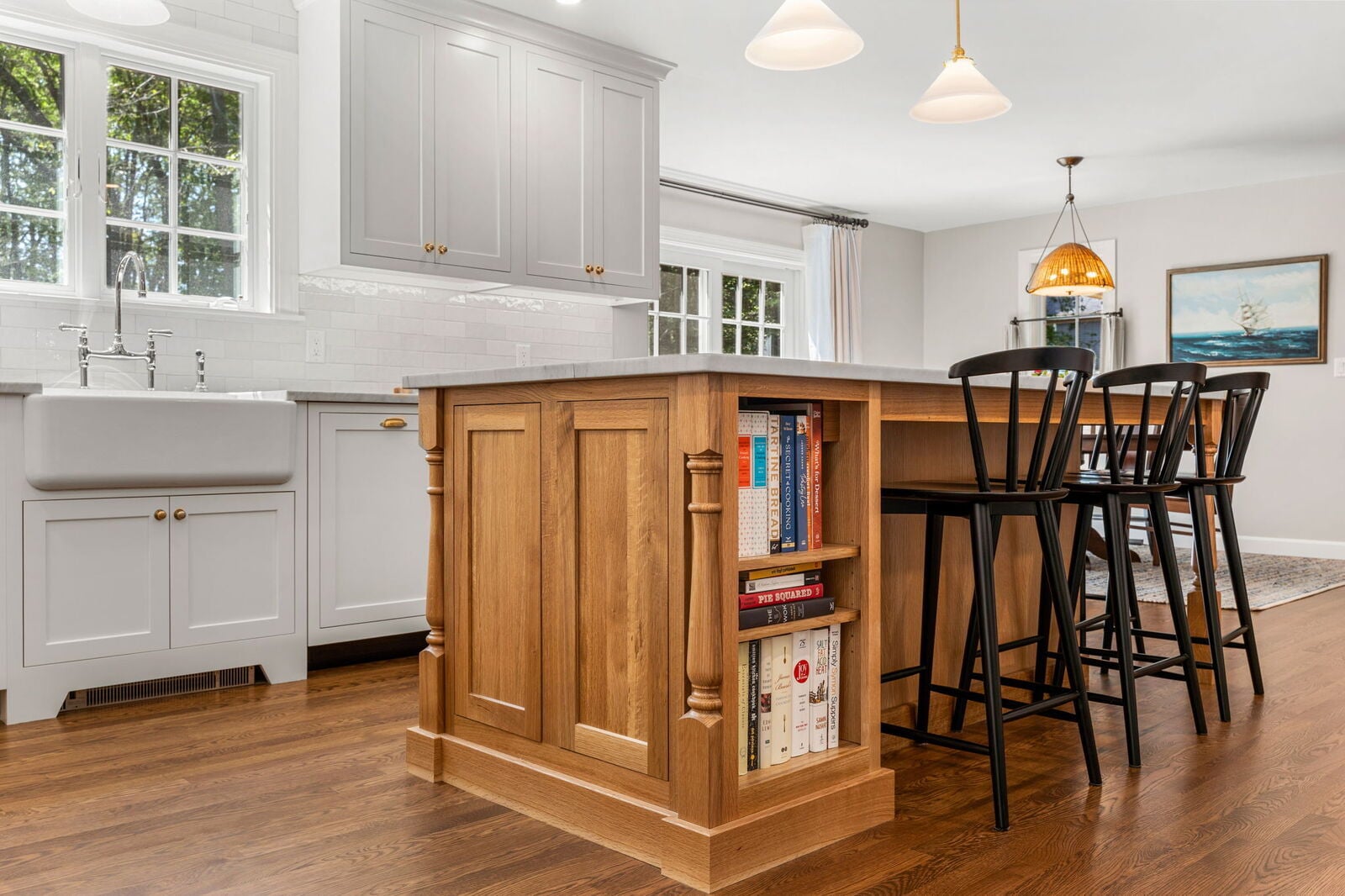
Listen to the Blog Post
"We want to add an island to our kitchen." Many remodeling conversations begin right there. Homeowners picture an island as the answer to the friction they live with every day: too little workspace, not enough storage, awkward traffic flow, or a kitchen that feels cut off from the people they want to be near. Adding a kitchen island can deliver all of that. It can also, in the wrong space, make a kitchen feel more cramped than it did before.
Whether you are modernizing an outdated layout, making room for a growing family, or preparing your home for the future, the real question isn’t "can an island fit." It is whether an island, at the size your space allows, will make the kitchen work better for how your household actually lives. Sometimes the answer is a generous island. Sometimes it is a reconfigured floor plan, and sometimes a kitchen peninsula offers nearly the same benefits while preserving the room's flow. Here is how to think it through before you commit.
Table of Contents
What Space Is Needed for a Kitchen Island
A well-designed kitchen island needs at least 36 inches of clearance on all sides, with 42 inches being better wherever you can find it. More is welcome if the room allows. That measurement is not arbitrary. It is the difference between a kitchen that moves with you and one that fights you.
When clearance is tight, the problems surface the moment the kitchen is in use. An open dishwasher or oven door blocks the walkway. Two cooks knock elbows as they try to pass. Drawers and appliance doors collide. The cooking zone feels congested. Entertaining, the very thing many homeowners want the island for, turns into a crowd-management exercise. A kitchen can technically hold an island and still function poorly every single day.
When the space simply cannot give a kitchen island the room it needs, forcing one in is the wrong move. The better path is to design around what the space can support, whether that is a smaller island, a different layout, or a peninsula.
How Much Space Should be Between a Kitchen Island and Cabinets?
The 36- to 42-inch guideline measures from the edge of the island to the face of your perimeter base cabinets and appliances, not to the wall behind them. That gap has to absorb open cabinet doors, a pulled-out oven rack, and a person standing at the counter while someone else walks past.
On the appliance side, give yourself the full 42 inches so a dishwasher or oven door can swing open without trapping anyone in the workspace.
Kitchen Island Dimensions and the Seating Most Homeowners Underestimate
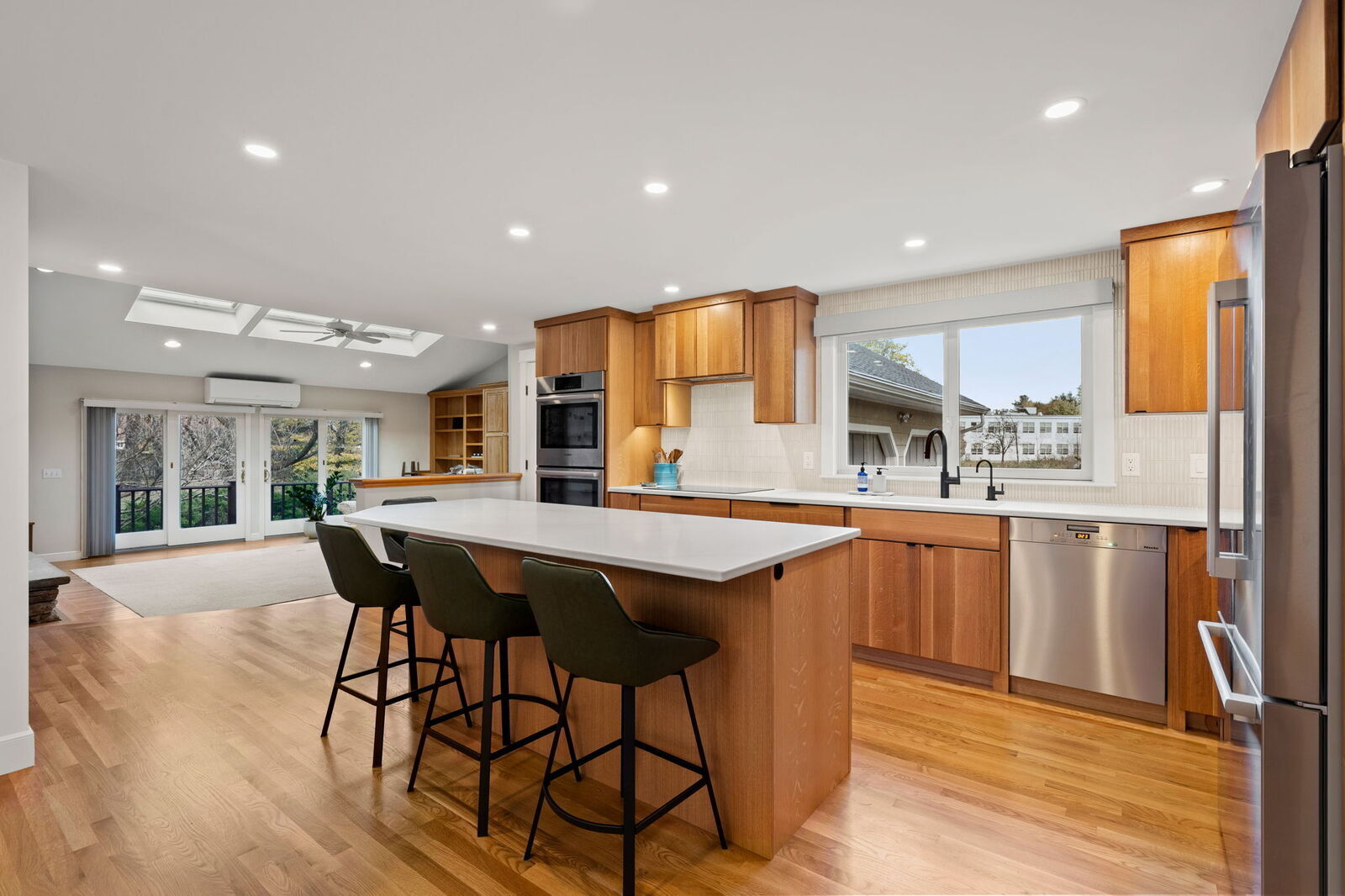
Sizing an island is where good intentions meet physics. Beyond the clearance around it, the island's footprint and seating determine how much room you truly need, and seating is the piece homeowners most often underestimate.
Plan on about two linear feet of counter space per seat, measured side to side, so a run that seats three needs roughly six feet of open counter. The stools matter too. The height of your bar stools or counter stools relative to the island sets the overhang you need and the legroom behind it. A 10-inch overhang is a comfortable starting point, though taller stools change the math: when seats sit higher, knees tuck in rather than extending out, so you can sometimes work with a shorter overhang. Either way, leave at least 42 inches from the edge of the overhang to anything behind it, because a stool pulled out still needs room for someone to walk past. When an overhang extends well beyond the cabinet base, it needs concealed support under the countertop so the surface stays solid, and some homeowners choose a furniture-style island with exposed island legs for a lighter, more open look.
Height is simpler. Plan on a 36-inch island to match the rest of your countertops, which is the ideal work surface height and keeps a prep sink at a comfortable level. The dual-height island, with a raised bar perched above a lower prep zone, was popular from the 1990s into the 2010s. They break up the counter, waste usable space, and rarely earn their footprint. A kitchen island with seating is one of the most requested features we design, but it only works when the dimensions are honest about the space it requires.
What You Can Build Into an Island
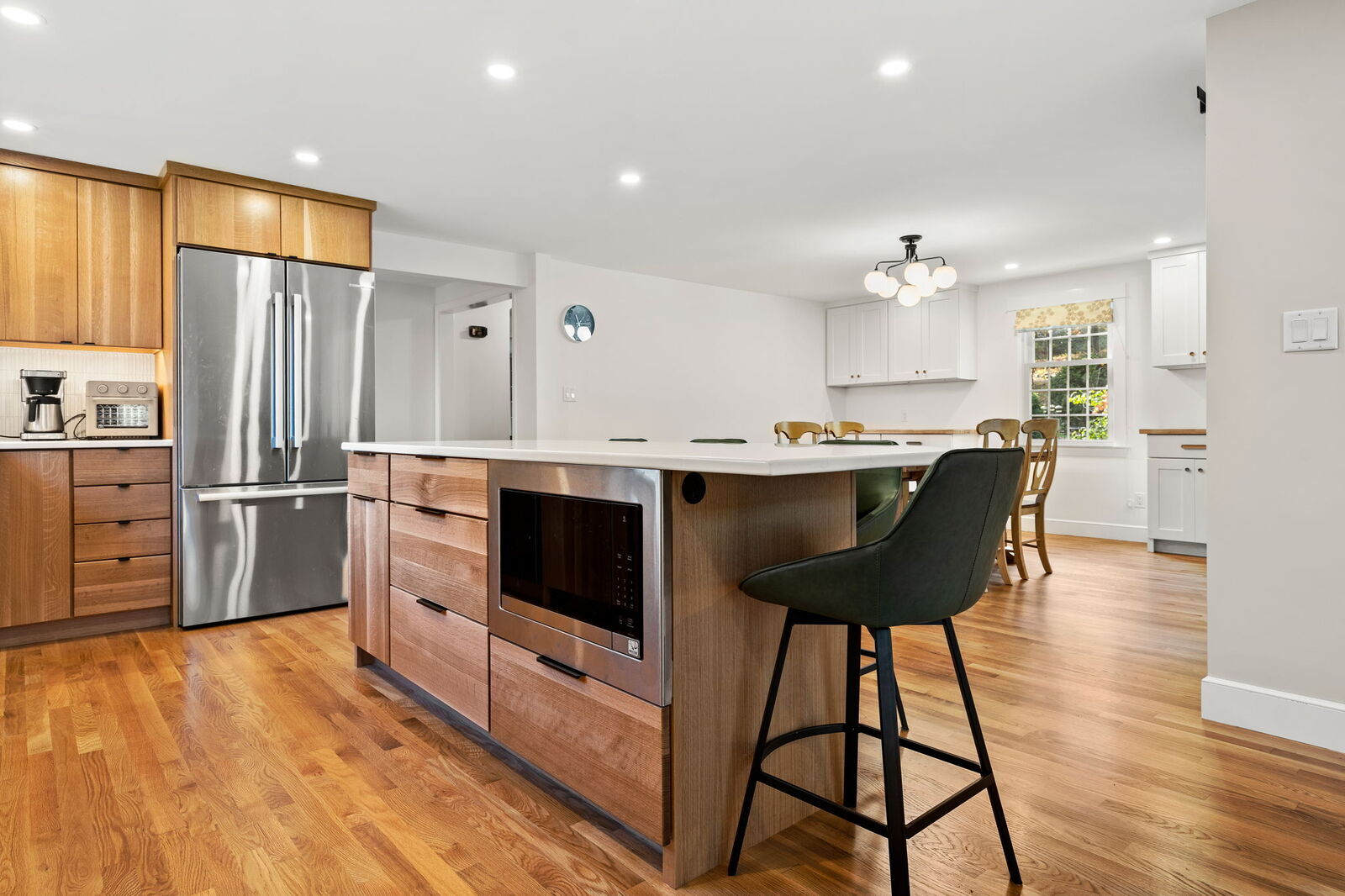
Once the size works, the kitchen island becomes a question of function. What do you want it to do? The answer shapes everything beneath the countertop.
An island can incorporate a sink or a prep sink, which helps keep the cook facing the room rather than a wall during meal prep. A dishwasher often sits alongside it. Both require planning below the surface: the water lines and drain have to run through the floor within the island, and the sink and dishwasher need specialty venting to drain properly. None of that shows in the finished kitchen, but all of it has to be designed in from the start.
A cooktop on the island is possible, though ventilation becomes the challenge. It is usually better to place the cooktop or range on an exterior wall so the range hood can exhaust straight outside. When the cooktop has to live on the island, the venting solution gets more involved, which is worth knowing before you commit to that layout.
 Which Countertop is the Most Functional?
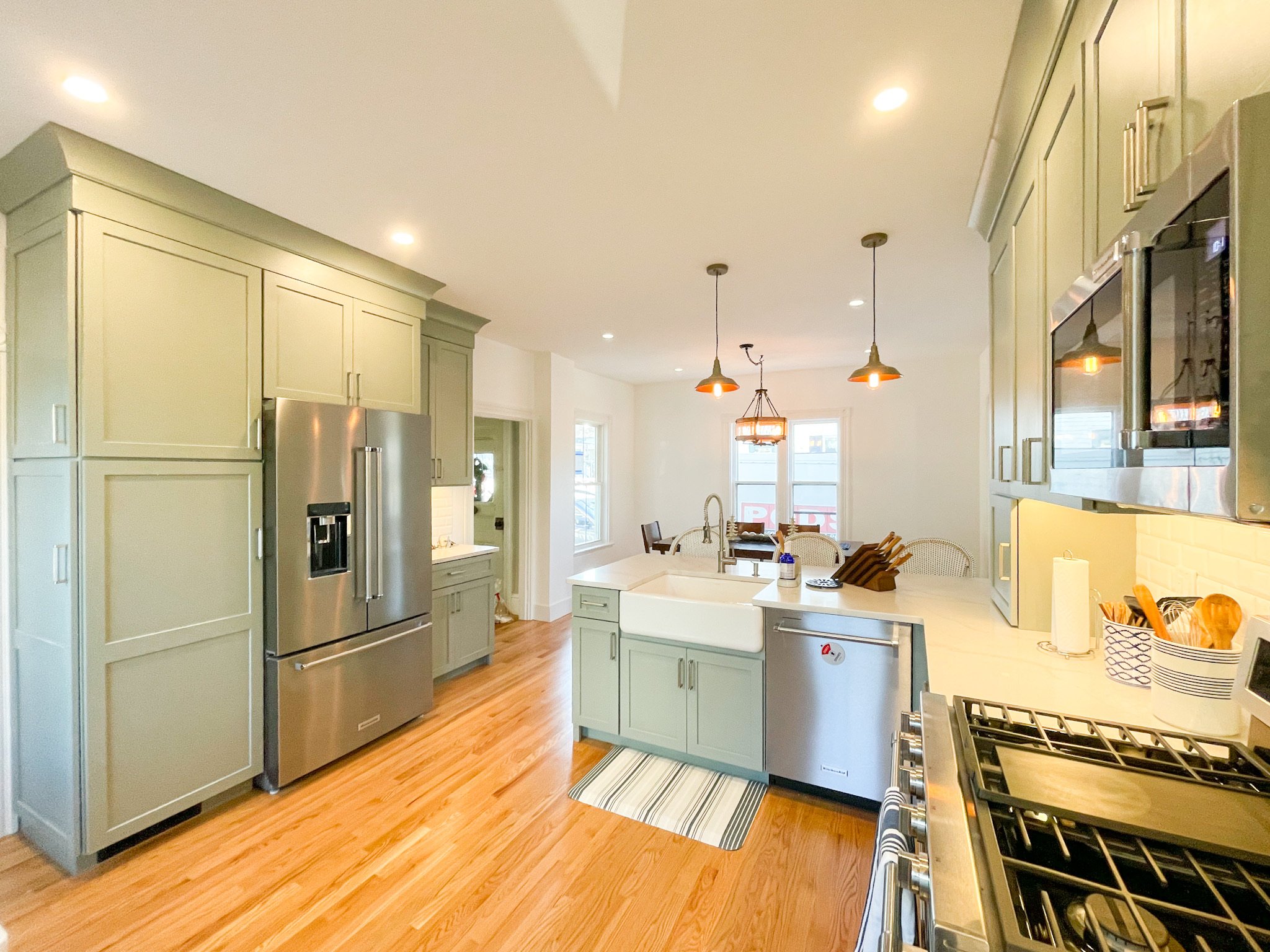
The island countertop takes the heaviest daily use in the kitchen, so countertop materials matter as much here as anywhere. The most functional countertop is the one that suits how you cook: a durable, low-maintenance surface stands up to constant meal prep, while a waterfall edge can give the island a cleaner, more finished look where it anchors an open room.
A good kitchen island design also turns to lighting as an opportunity. Pendants over the island handle task lighting and let you showcase a fixture that becomes a quiet design statement.
When Remodeling Creates the Space for an Island
Here is where many homeowners are pleasantly surprised. If your current kitchen cannot accommodate the island you want, the answer is not always no. It is often "not in this layout." A good design-build firm does the homework upfront, learning how you live before drawing anything, and then designs around it. That is what makes remodeling worth doing.
Creating the room usually takes one of a few forms. Removing a wall to open the kitchen to an adjacent living or dining space can create island opportunities that were impossible before. Reconfiguring the layout entirely, moving appliances, relocating work zones, and designing island cabinets and base cabinets that use every inch can improve circulation and free up floor space you did not know you had. Part of that work is purpose-built storage: putting the trash pull-out, the pantry cabinet, the corner Lazy Susan, and the spice racks where they actually serve the cook, so nothing collides when two doors open at once. Sometimes the solution lives outside the kitchen entirely. A formal dining room that no one uses might become part of the kitchen itself. The key insight is this: the question is often not whether your current kitchen can support an island, but whether a redesigned floor plan can.
Cost naturally enters the conversation here. In remodeling, nearly anything is possible with the right investment. The more useful question is not whether something can be done, but whether it makes sense within your goals and budget. Much of our design work is value engineering, weighing options and steering investment toward the changes that improve function, aesthetics, and long-term value the most.
A whole-kitchen renovation costs more than dropping an island into an existing layout, but it also delivers a kitchen built around your life rather than a short-term feature retrofit. Clear budget parameters early, and keep those design decisions aligned with your priorities.
.png?width=1200&height=800&name=alpine-way-kitchen_1200x800%20(6).png)
.png?width=970&height=647&name=alpine-way-kitchen_1200x800%20(5).png)
When a Kitchen Peninsula Is the Better Fit
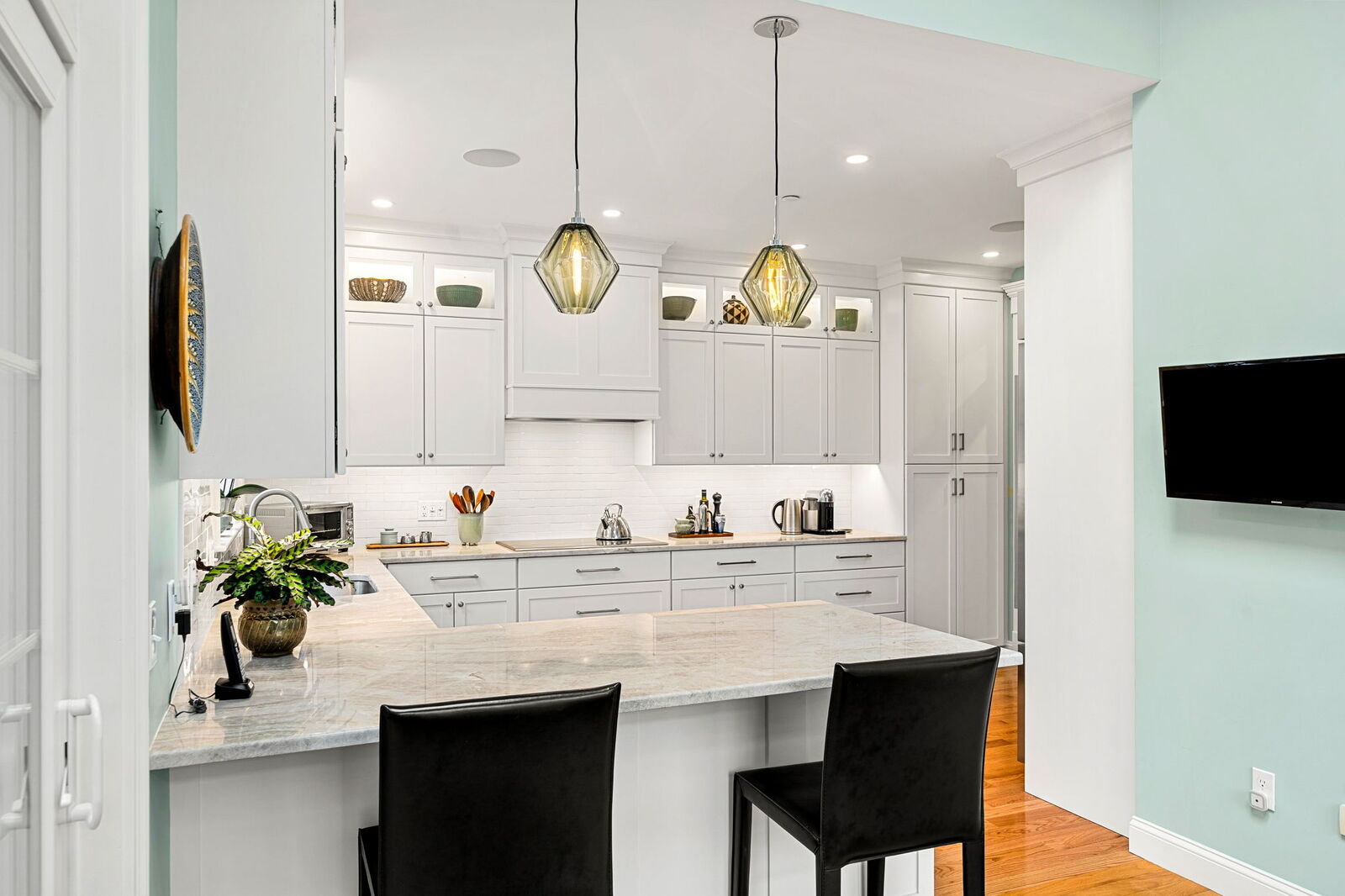
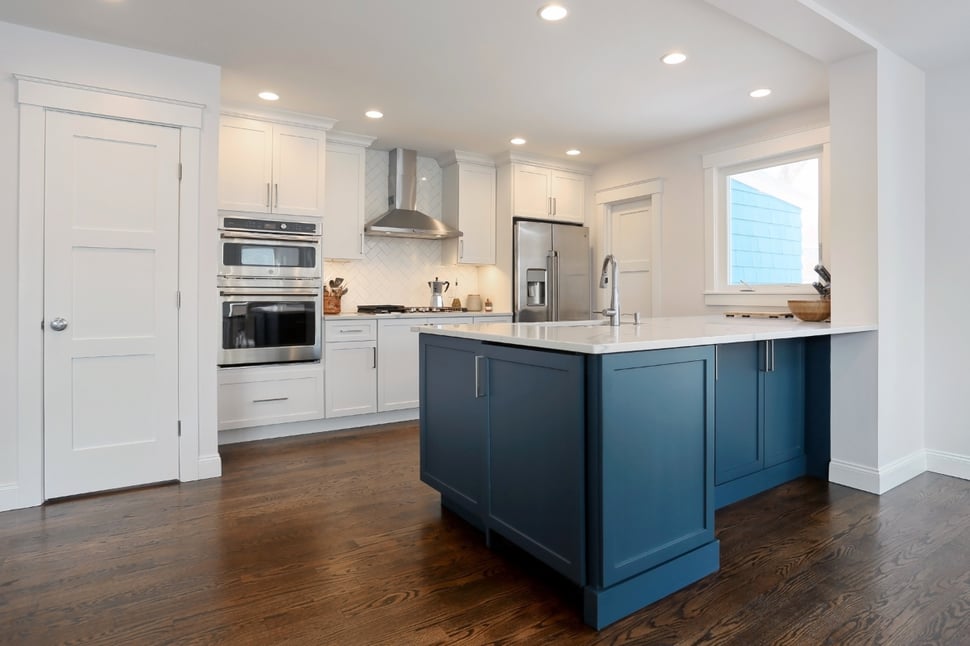
Not every kitchen needs an island, and the alternative is not a compromise. A kitchen peninsula, a counter connected to the existing cabinetry on one end rather than standing free, can deliver much of what homeowners want from an island: additional prep space, extra counter space, seating, extra storage, and a better work surface, all while requiring less clearance.
A peninsula brings a few advantages that an island does not. Because it is anchored on one side, it creates a natural barrier that keeps guests from drifting into the cook's workspace, a common complaint we hear when people entertain. It also draws a clear line between the kitchen and the dining space beside it, so the two can share a room without blurring together. In older and more compact North Shore homes, a peninsula often preserves the flow of the room while delivering the same daily benefits an island would. This is not a rare fallback, either. Across the North Shore, we add peninsulas around 40 percent of the time and islands closer to 60 percent, depending on the home. Some layouts, especially galley and U-shaped kitchens, simply favor one over the other. The point is that the function should lead. The most successful kitchens are not designed around a feature everyone assumed they wanted. They are designed around how people move, cook, gather, and live.
Let the Island Support the Design, Not Dictate It
A kitchen island should support the overall design, not drive it. Before deciding whether one belongs in your remodel, it is worth evaluating the whole picture: circulation, work zones, appliance placement, any structural constraints, and how the kitchen connects to the rest of your home. In some projects, a kitchen island with seating becomes the centerpiece of a layout that finally works. In others, a peninsula or a different floor plan delivers the better long-term result.
A few questions help locate where you are in that decision. Have you defined what a successful kitchen looks like for your household? Are the people making the decision aligned on scope and investment? Are you prepared for the temporary disruption a remodel involves? The goal was never simply to add a kitchen island. The goal is a kitchen that works better for the way your family lives every day, this year and in the ones ahead.
Download the Kitchen Remodeling Planning Guide
Whether your kitchen ultimately needs an island, a peninsula, or a more comprehensive redesign, the best remodeling decisions begin with a clear understanding of how you want the space to function.
Our free guide, Planning a Kitchen Remodel: A Guide to Layout, Investment, and Design Decisions That Matter, walks you through the questions that shape a successful project before design begins.
Download your free Kitchen Remodeling Planning Guide and start planning with greater clarity and confidence.

Start the Conversation
If you are weighing whether an island, a peninsula, or a larger reconfiguration is right for your kitchen, that is exactly the kind of question our design process is built to answer. During an initial consultation, we will talk through how you use your kitchen, your investment range, your timeline, and whether our structured design-build process fits the way you prefer to work. Our approach is best suited to homeowners who value thoughtful planning and craftsmanship over the lowest bid.